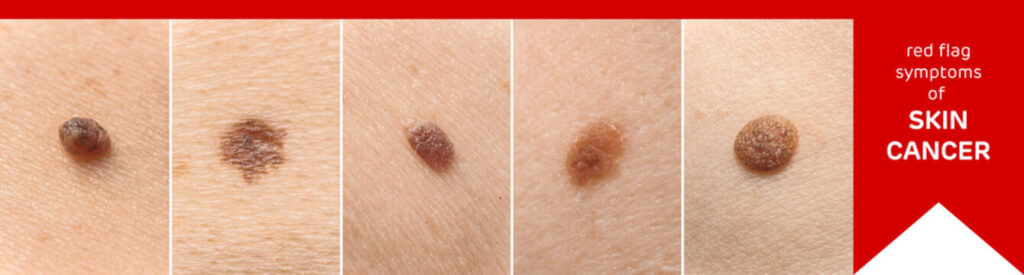
What Are These Spots on My Skin?
Age Spots, Sun Damage, Moles, Seborrheic Keratoses & Precancerous Skin Changes
Not every new spot on your skin is a cause for concern.
As we age, it is common to develop moles, freckles, age spots, seborrheic keratoses and other harmless skin growths. Years of sun exposure can also cause visible changes to the skin.
However, some spots can represent precancerous changes or skin cancer, particularly when they are new, changing, bleeding or different from the other spots on your skin.
The important thing is not to diagnose a spot yourself from a photograph or description. Instead, learn which changes deserve professional assessment.
1. Age Spots (Solar Lentigines)
Age spots, also called solar lentigines, are flat areas of increased pigmentation caused mainly by long-term ultraviolet (UV) exposure.
They become increasingly common with age.
What do they look like?
They are usually:
- Flat
- Brown, tan or dark brown
- Clearly defined
- Round or irregularly shaped
- Usually painless
- Not itchy
They commonly appear on areas exposed to the sun:
- Face
- Hands
- Shoulders
- Arms
- Upper chest
Are age spots dangerous?
Usually, no.
However, a dermatologist may need to examine a spot that changes in color, shape or size because some skin cancers can resemble an age spot.
Treatment
Age spots do not usually require treatment.
If desired for cosmetic reasons, dermatologists may use:
- Laser treatment
- Cryotherapy
- Chemical peels
- Prescription lightening treatments
Sun protection is essential to reduce the development of additional spots.
2. Freckles
Freckles are small, flat areas of increased pigmentation.
They are often:
- Tan or light brown
- Small
- Numerous
- More noticeable after sun exposure
Freckles themselves are generally harmless.
However, people with many freckles—particularly those with significant sun exposure—should be careful about UV protection and regular skin checks.
3. Moles (Nevi)
Moles are very common collections of pigment-producing cells.
Most are harmless.
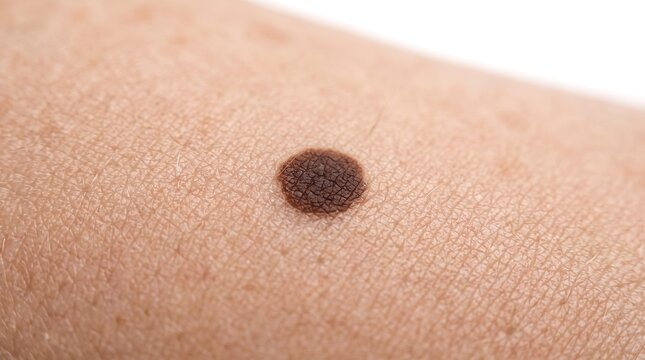
A typical benign mole is usually:
- Round or oval
- Relatively symmetrical
- Uniform in color
- Stable over time
Moles can be:
- Flat
- Raised
- Brown
- Black
- Pink or skin-colored
When should a mole be checked?
Pay attention to changes, particularly:
- Increasing size
- Irregular shape
- Uneven color
- Bleeding
- Crusting
- Persistent itching
- Pain
- A new mole appearing later in life
The ABCDE Rule
A useful way to remember warning signs of melanoma is ABCDE:
| Letter | What to Look For |
|---|---|
| A – Asymmetry | One half doesn’t resemble the other |
| B – Border | Irregular, jagged or poorly defined border |
| C – Color | Several colors or uneven pigmentation |
| D – Diameter | Larger than about 6 mm can be concerning, although melanomas can be smaller |
| E – Evolving | Changing in size, shape, color or symptoms |
⭐ The most important one?
E = Evolving.
A changing spot deserves attention even if it does not fit all the other ABCDE characteristics.
Not sure whether a spot is a harmless mole or something that should be checked? Read:
Should I Be Worried About This Mole?
4. Seborrheic Keratoses
Seborrheic keratoses are very common benign skin growths, particularly in middle-aged and older adults.
They can initially look like brown spots but often become thicker and appear as though they are stuck onto the skin.
They may be:
- Brown
- Black
- Tan
- Pale
- Rough
- Waxy
- Slightly raised
They commonly appear on the:
- Chest
- Back
- Face
- Neck
- Arms
Are they contagious?
No.
Do they need treatment?
Usually not.
They can be removed if they:
- Become irritated
- Bleed after repeated friction
- Catch on clothing
- Are cosmetically bothersome
- Have an uncertain diagnosis
5. Actinic Keratoses — Precancerous Sun-Damaged Spots
This is an especially important section for older adults.
An actinic keratosis (AK) develops after years of cumulative UV exposure.
It may appear as:
- A rough or scaly patch
- A pink, red, tan or brown spot
- A dry area that repeatedly comes back
- A patch that feels rougher than it looks
The important clue can be texture.
Sometimes you can feel an actinic keratosis before you can clearly see it.
Where do they occur?
Usually on chronically sun-exposed areas:
- Face
- Scalp, especially in people with little hair
- Ears
- Forehead
- Hands
- Forearms
- Neck
Why are they important?
Actinic keratoses are considered precancerous lesions because some can progress to squamous cell carcinoma (SCC).
That does not mean every actinic keratosis will become cancer. However, suspicious or persistent lesions should be assessed by a healthcare professional.
Treatment
Depending on the number and location, treatment may include:
- Cryotherapy
- Prescription topical treatments
- Photodynamic therapy
- Curettage
- Other dermatologist-directed treatments
6. What About Skin Cancer?
Some skin cancers can initially look like an ordinary spot.
Possible warning signs include:
- A new spot that looks different from your other spots
- A spot that changes
- A sore that does not heal
- Repeated bleeding or crusting
- A rapidly growing lesion
- A persistent rough patch
- A mole with ABCDE warning signs
The three major types of skin cancer include:
Basal Cell Carcinoma
Often appears as a:
- Shiny or pearly bump
- Pink or flesh-colored lesion
- Persistent sore
- Area that repeatedly crusts or bleeds
Squamous Cell Carcinoma
May appear as:
- A rough scaly patch
- A firm growth
- A crusted lesion
- A sore that does not heal
It can develop from actinic keratosis.
Melanoma
Melanoma develops from pigment-producing cells and can appear as a changing mole or a new unusual pigmented lesion.
Early detection is particularly important.
What Could the Spot Be?
| Appearance | Possible Cause | Usually Contagious? | Needs Assessment? |
|---|---|---|---|
| Flat brown spot after years of sun | Age spot | ❌ | If changing |
| Small light-brown spots | Freckles | ❌ | If unusual/changing |
| Stable symmetrical mole | Benign mole | ❌ | Routine monitoring |
| Raised, waxy “stuck-on” growth | Seborrheic keratosis | ❌ | If changing or uncertain |
| Rough sun-damaged patch | Actinic keratosis | ❌ | Yes—should be assessed |
| Changing irregular pigmented lesion | Possible melanoma | ❌ | Prompt assessment |
| Persistent crusting/bleeding sore | Possible skin cancer | ❌ | Prompt assessment |
Age Matters
A new skin lesion deserves more attention when it appears later in life, particularly on chronically sun-exposed skin.
This does not mean that every new spot in an older person is cancer.
It means that a new or changing lesion should not automatically be dismissed as “just an age spot.”
Children
Children can develop:
- Freckles
- Moles
- Birthmarks
- Viral warts
- Other benign skin lesions
Most are harmless.
However, parents should have a new or changing lesion assessed if it:
- Grows rapidly
- Changes significantly
- Bleeds repeatedly
- Becomes painful
- Looks very different from the child’s other moles
Children with numerous moles or significant sun exposure may benefit from learning good sun-protection habits early in life.
When Should You See a Dermatologist?
Arrange a professional assessment if a spot:
- Is new and unusual.
- Is changing in size, shape or color.
- Has an irregular border.
- Contains several different colors.
- Bleeds without obvious injury.
- Crusts repeatedly.
- Becomes painful.
- Itches persistently.
- Does not heal.
- Feels rough or scaly and persists.
🚨 Don’t wait for it to become painful.
Skin cancers can be painless in their early stages.
A persistent or changing lesion is more important than whether it hurts.
Can I Remove a Skin Spot Myself?
It is not recommended to remove an unexplained mole, growth or suspicious spot at home.
Home removal products can:
- Cause burns
- Cause infection
- Leave scars
- Destroy tissue that needs to be examined
- Delay diagnosis of skin cancer
A dermatologist can determine whether a lesion is harmless and, if necessary, remove it safely and send it for laboratory examination.
Sun Protection
Preventing further UV damage is one of the most important things you can do for your skin.
Use:
- Broad-spectrum sunscreen
- Protective clothing
- Hats
- Sunglasses
- Shade during strong sunlight
Remember that sun damage accumulates over your lifetime.
💊 Pharmacist’s Tip
If you are over 50 and notice a new, changing or persistently rough spot on a sun-exposed area, don’t automatically assume it is an age spot.
Age spots, actinic keratoses and some skin cancers can look surprisingly similar.
When in doubt, have the lesion examined rather than treating it yourself.
Are age spots dangerous?
Most age spots are harmless. However, a spot that changes should be examined because some skin cancers can resemble pigmentation caused by sun exposure.
Can age spots turn into cancer?
Typical solar lentigines are benign and do not themselves turn into skin cancer. However, a cancerous lesion can sometimes resemble an age spot.
Are seborrheic keratoses contagious?
No. They are benign skin growths and cannot spread from person to person.
What does a precancerous skin spot look like?
Actinic keratoses often feel rough or scaly and may appear as red, pink, tan or brown patches on chronically sun-exposed skin.
Can an actinic keratosis disappear by itself?
Some may temporarily become less noticeable, but persistent or recurrent lesions should be assessed by a healthcare professional.
Should every new mole be removed?
No. Most moles are benign. Removal depends on their appearance, changes over time and the dermatologist’s assessment.
Is melanoma always black?
No. Melanoma can be brown, black, pink, red, blue, white or a combination of colors.
Can skin cancer look like a pimple?
Yes. Some basal cell or squamous cell carcinomas can initially resemble a pimple, sore or irritated spot that does not heal.
Clinical Disclaimer
This article is for educational purposes only and cannot diagnose a skin lesion. If you have a new, changing, bleeding, crusting or non-healing spot, particularly if it is different from your other skin lesions, arrange an examination by a dermatologist or other qualified healthcare professional. Early assessment is important for suspected skin cancer.
References
- American Academy of Dermatology (AAD). Skin cancer: Signs and symptoms; melanoma ABCDE warning signs.
- American Academy of Dermatology (AAD). Actinic keratosis: Diagnosis and treatment.
- American Academy of Dermatology (AAD). Seborrheic keratoses: Diagnosis and treatment.
- National Cancer Institute (NCI). Melanoma Treatment and Skin Cancer information.
- Centers for Disease Control and Prevention (CDC). Skin cancer prevention and UV exposure.
- American Cancer Society. Signs and symptoms of melanoma and other skin cancers.
Related Articles
- Why Is My Skin Dry, Itchy, Red or Scaly?
- Why Do Certain Foods Make Me Feel Sick? Food Intolerances Explained
- Why Do I Keep Getting Cold Sores or Shingles?
- Why Are My Eyes Dry, Itchy and Watery?
- Why Do I Have a Skin Rash?