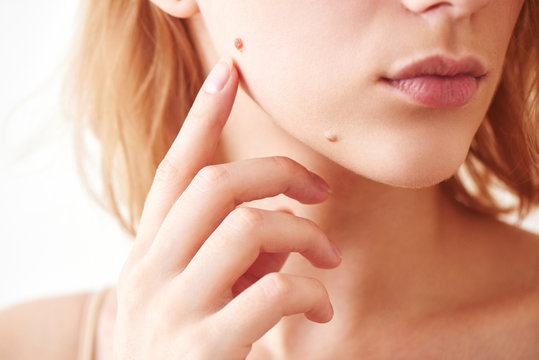
Mole Warning Signs, ABCDE Rule, Skin Cancer & When to See a Dermatologist
Should I Be Worried About This Mole?
Most moles are harmless, and having several moles is extremely common.
New moles can also appear, particularly during childhood and adolescence. Some moles may become lighter or disappear as you get older.
The important question is not simply:
“Does this mole look unusual?”
It is:
“Has this mole changed, or is it different from my other spots?”
A new or changing mole can sometimes be an early sign of melanoma, a type of skin cancer that can become serious if it is not detected and treated early.
What Does a Normal Mole Look Like?
A typical common mole is usually:
- Round or oval
- Relatively symmetrical
- Fairly evenly colored
- Clearly defined
- Stable over time
Moles can be:
- Brown
- Black
- Tan
- Pink
- Flesh-colored
They can also be flat or raised.
The fact that a mole is raised does not automatically mean it is dangerous.
What matters most is whether it is changing or looks significantly different from your other moles.
Why Do Moles Appear?
Moles develop when pigment-producing cells called melanocytes grow in clusters rather than being distributed individually throughout the skin.
Genetics, age and sun exposure all influence the number and appearance of moles.
Children and teenagers commonly develop new moles.
When Should I Worry About a Mole?
The most useful tool for checking a suspicious mole is the ABCDE rule.
A — Asymmetry
Imagine dividing the mole into two halves.
If one half looks very different from the other, the mole deserves attention.
A normal mole is often fairly symmetrical.
B — Border
Look at the edges.
Be cautious if the border is:
- Irregular
- Jagged
- Scalloped
- Blurred
- Poorly defined
A melanoma may have an uneven or poorly defined border.
C — Color
A typical mole is often relatively uniform in color.
Be more cautious if one spot contains several colors, such as:
- Brown
- Black
- Red
- White
- Blue
- Gray
A change in color is particularly important.
D — Diameter
Melanomas are often larger than 6 mm, approximately the size of a pencil eraser, when diagnosed.
But this is extremely important:
A melanoma can be smaller than 6 mm.
Therefore, do not use size alone to decide whether a mole is safe.
E — Evolving
This is perhaps the most important warning sign.
Look for a mole that is:
- Growing
- Changing shape
- Changing color
- Becoming raised
- Developing a new symptom
- Looking different from your other moles
A mole that is changing over time should be checked.
The “Ugly Duckling” Sign
There is another useful way to examine your skin:
Look for the mole that doesn’t look like the others.
If most of your moles look similar but one looks noticeably different, pay attention to it.
This is sometimes called the “ugly duckling” sign.
It can be particularly useful when a person has many moles and it is difficult to compare every one with the ABCDE criteria.
Can a Mole Itch or Bleed?
Yes — but this does not automatically mean cancer.
A mole can become irritated by:
- Clothing
- Shaving
- Scratching
- Friction
- Injury
However, a mole that repeatedly bleeds, crusts, itches, becomes painful or changes should be evaluated rather than repeatedly irritated or treated at home.
What About a New Mole After Age 40?
A new pigmented lesion in adulthood deserves more attention than a new mole in a child or teenager.
This does not mean that every new mole in an adult is melanoma.
However, a new or unusual pigmented spot that persists or changes should be assessed by a healthcare professional, particularly if it has ABCDE features or looks different from your other spots.
Moles in Children
New moles are common during childhood and adolescence.
Most are harmless.
However, children can also develop melanoma, although it is uncommon.
Parents should pay attention to a mole that:
- Changes rapidly
- Looks very different from the child’s other moles
- Becomes painful
- Bleeds
- Develops multiple colors
- Has an irregular border
- Continues changing
The ABCDE rule can still be useful in children, but a changing or unusual lesion should be professionally assessed rather than judged from photographs online.
Mole vs Actinic Keratosis vs Melanoma
Not every suspicious-looking skin spot is a mole.
| Condition | Typical Appearance | Main Clue | What to Do |
|---|---|---|---|
| Common mole | Round/oval, relatively uniform | Usually stable | Monitor for changes |
| Atypical mole | Irregular shape/color | May look different from common moles | Dermatology assessment may be appropriate |
| Actinic keratosis | Rough, dry, scaly patch | Usually sun-damaged skin | Medical assessment |
| Melanoma | Variable appearance | ABCDE changes/evolving lesion | Prompt dermatology assessment |
| Seborrheic keratosis | Often raised, waxy or “stuck-on” | Usually benign | Assessment if uncertain or changing |
| Basal cell carcinoma | May look like a shiny bump or non-healing sore | Persistent growth/bleeding/crusting | Medical assessment |
| Squamous cell carcinoma | Scaly, crusted or firm growth | Persistent or enlarging lesion | Medical assessment |
What Is an Atypical Mole?
An atypical mole, also called a dysplastic nevus, may have an unusual shape, border or color.
Having atypical moles does not mean you have melanoma.
However, people with certain atypical mole patterns may have a higher risk of melanoma and may benefit from regular professional skin examinations.
What Are Those Rough Spots on Older Skin?
This is particularly important as we get older.
A rough, dry or scaly patch on sun-exposed skin may be an actinic keratosis (AK).
Actinic keratoses are caused by cumulative ultraviolet radiation and are considered precancerous skin growths because some can progress to squamous cell carcinoma. They commonly occur on areas such as the:
- Face
- Scalp
- Ears
- Neck
- Hands
- Forearms
They are not the same thing as a mole.
If you notice a persistent rough or scaly spot, particularly on sun-damaged skin, it should be assessed rather than assumed to be simply “age spots.”
Mole vs Age Spot
Age spots, also called solar lentigines, are usually flat areas of increased pigmentation caused by cumulative sun exposure.
They are generally harmless.
However, a new or changing pigmented spot should not automatically be dismissed as an age spot.
If a spot becomes irregular, changes color, grows or develops symptoms, have it examined.
Can a Mole Turn Into Melanoma?
Some melanomas develop within an existing mole, while others appear as a new lesion on previously normal skin.
This is why skin checks should not focus only on your existing moles.
Look for:
NEW + DIFFERENT + CHANGING
Those three features deserve particular attention.
Where Can Melanoma Occur?
Melanoma is not limited to the areas of skin that are most exposed to the sun.
It can also occur on:
- Scalp
- Between the toes
- Palms
- Soles of the feet
- Under or around fingernails
- Under or around toenails
Some less common melanomas can occur in areas such as the eyes or other tissues.
People with darker skin should pay particular attention to the palms, soles and nail areas, where melanoma can sometimes develop.
How Should I Check My Moles?
A simple skin self-check can help you notice changes.
Use:
- A full-length mirror
- A handheld mirror
- Good lighting
Check:
- Face
- Scalp
- Neck
- Chest
- Back
- Arms
- Hands
- Between fingers
- Legs
- Feet
- Soles
- Between toes
- Nails
For difficult areas such as the back of your scalp or back, ask someone you trust to help.
The American Academy of Dermatology recommends looking for new, different or changing spots, as well as lesions that itch or bleed.
Should I Photograph My Moles?
Photographs can be useful for noticing changes over time.
Take clear photographs in good lighting and keep them for comparison.
For people with many moles, a simple body map can also help identify whether a spot is new or changing.
However, photographs should not replace professional skin examinations when a lesion looks suspicious.
When Should I See a Dermatologist?
Arrange a medical assessment if a mole or pigmented spot:
- Changes size
- Changes shape
- Changes color
- Develops multiple colors
- Has an irregular border
- Looks very different from your other moles
- Repeatedly bleeds
- Crusts
- Itches persistently
- Becomes painful
- Grows
- Does not heal
You should also seek assessment for a new or unusual skin lesion that persists for several weeks.
Don’t wait for a mole to become painful.
Melanoma may cause no pain or discomfort, particularly in its early stages.
Can I Remove a Mole Myself?
No.
Do not try to:
- Cut it off
- Burn it
- Tie it off
- Apply acids
- Use online “mole removal” products
- Repeatedly scratch it
A suspicious mole needs proper assessment.
If a dermatologist believes removal is appropriate, the tissue can also be examined to determine what it is.
Can Sun Protection Prevent Melanoma?
Reducing excessive ultraviolet exposure is an important part of skin-cancer prevention.
Helpful measures include:
- Seek shade when UV exposure is high.
- Wear protective clothing.
- Wear a wide-brimmed hat.
- Use broad-spectrum sunscreen.
- Reapply sunscreen as directed.
- Avoid tanning beds and sunlamps.
Sun protection is particularly important for people with many moles or significant previous sun exposure.
What About Supplements for Moles or Skin Cancer?
There is no supplement that can safely be recommended to remove a suspicious mole or prevent melanoma.
Do not delay examination of a changing mole because you are taking:
- Vitamin C
- Vitamin D
- Zinc
- Antioxidants
- Herbal supplements
- Other “skin health” products
A suspicious lesion needs proper diagnosis, not supplementation.
💊 Pharmacist’s Tip
When someone shows me a mole and asks, “Does this look dangerous?”, the most important thing is not to make a diagnosis from appearance alone.
A useful first step is to ask:
Is it new? Has it changed? Is it different from the others?
The ABCDE rule is a useful screening tool, but it is not a diagnostic test.
If a mole is changing, bleeding, crusting, persistently itching or simply looks unusual, professional assessment is the safest approach.
Are most moles cancerous?
No. Most common moles are harmless.
Is a raised mole dangerous?
Not necessarily. Many harmless moles are raised. The important features are change, irregularity and other warning signs.
Can a mole disappear?
Yes. Some moles can fade or disappear with age
Is every black mole dangerous?
No. Color alone does not diagnose melanoma. However, a very dark, changing or multicolored lesion should be assessed.
Is a 5 mm mole safe?
Not necessarily. Melanomas can be smaller than 6 mm. Diameter is only one part of the ABCDE rule.
Can a mole itch and still be harmless?
Yes. Irritation can cause itching. But persistent itching, particularly together with change, bleeding or crusting, warrants assessment.
Can a mole bleed from being scratched?
Yes. Trauma can make a mole bleed. However, a mole that repeatedly bleeds or develops other changes should be checked.
Are new moles normal in teenagers?
Yes. New moles commonly appear during childhood and adolescence.
Should an older person have a new mole checked?
A new or unusual pigmented lesion appearing later in life deserves attention, particularly if it changes or looks different from existing spots.
What is the ABCDE rule?
A = Asymmetry
B = Border
C = Color
D = Diameter
E = Evolving
It is a useful way to identify skin lesions that need professional assessment.
Can melanoma develop under a fingernail?
Yes. Melanoma can appear as a dark line or pigmented area under or around a nail.
Bottom Line
Most moles are harmless.
But a mole that is new, changing, different from your other spots, bleeding, crusting, itching or growing deserves attention.
Use the ABCDE rule as a simple screening tool:
Asymmetry — Border — Color — Diameter — Evolving
Remember that melanoma can be smaller than 6 mm, and it does not always look like a classic dark mole.
Also remember that not every suspicious skin spot is a mole. Actinic keratoses, basal cell carcinoma, squamous cell carcinoma and melanoma can all appear in different ways, particularly on chronically sun-damaged skin.
If you are unsure about a changing or unusual lesion, have it examined rather than trying to diagnose or remove it yourself.
Early evaluation can make a major difference when skin cancer is present.
Medical Disclaimer
This article is for educational purposes only and does not diagnose skin cancer or replace examination by a dermatologist or other qualified healthcare professional. Any new, changing, bleeding, crusting, painful or otherwise unusual mole or skin lesion should be professionally assessed.
References
- American Academy of Dermatology. What to look for: ABCDEs of melanoma.
- American Academy of Dermatology. Melanoma: Signs and symptoms.
- American Academy of Dermatology. How to examine your skin for skin cancer.
- American Academy of Dermatology. Moles: Who gets moles and types of moles.
- NHS. Symptoms of melanoma skin cancer.
- NHS. Moles.
- American Academy of Dermatology. Types of skin cancer.
- American Cancer Society. Skin Cancer Fact Sheet for Health Care Professionals.
Related guides:
- What Are These Spots on My Skin?
- Why Is My Skin Dry, Red or Scaly?
- Why Do I Keep Getting Pimples?
- Why Do I Have a Skin Rash?
- Why Do I Keep Getting Cold Sores or Shingles?