
Broken Bone or Sprain? How to Tell the Difference, Symptoms & What to Do
You fall, twist your ankle, hit your wrist or injure your knee—and suddenly it hurts.
Is it broken? Sprained? Strained? Or simply bruised?
Unfortunately, these injuries can look very similar.
A badly sprained ankle can become extremely swollen and bruised, while some fractures can cause surprisingly little swelling or may still allow you to move the injured limb.
You cannot always tell at home whether a bone is broken. When a fracture is possible, medical assessment and sometimes an X-ray are needed.
The safest rule is:
If you are not sure whether an injury is a fracture or a severe soft-tissue injury, treat it cautiously and get it assessed.
First: What Is a Fracture, Sprain, Strain or Bruise?
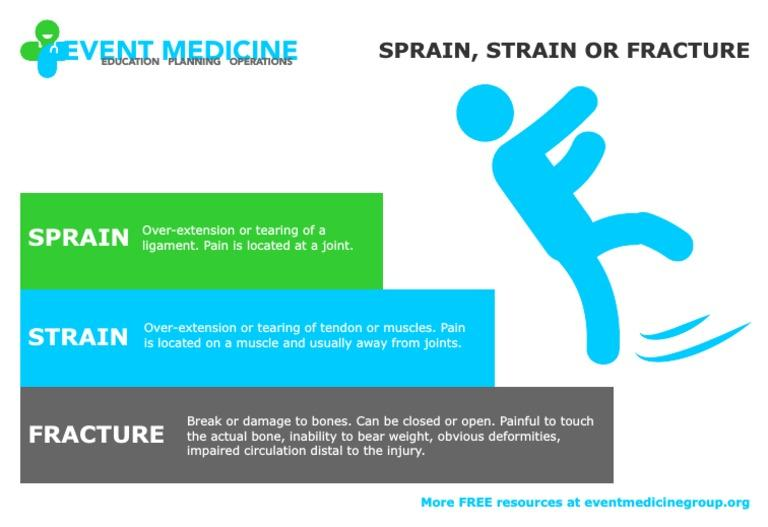
These words describe different types of injuries.
| Injury | What is injured? | Simple explanation |
|---|---|---|
| Fracture | Bone | The bone is cracked or broken |
| Sprain | Ligament | A ligament is stretched or torn |
| Strain | Muscle or tendon | A muscle or tendon is overstretched or torn |
| Bruise | Small blood vessels/tissues | Blood leaks into tissues after an impact |
A ligament connects one bone to another and helps stabilize a joint.
A tendon connects a muscle to a bone.
So:
Sprain = ligament
Strain = muscle/tendon
Fracture = bone
This distinction is important because treatment and recovery can be very different.
What Is a Broken Bone?
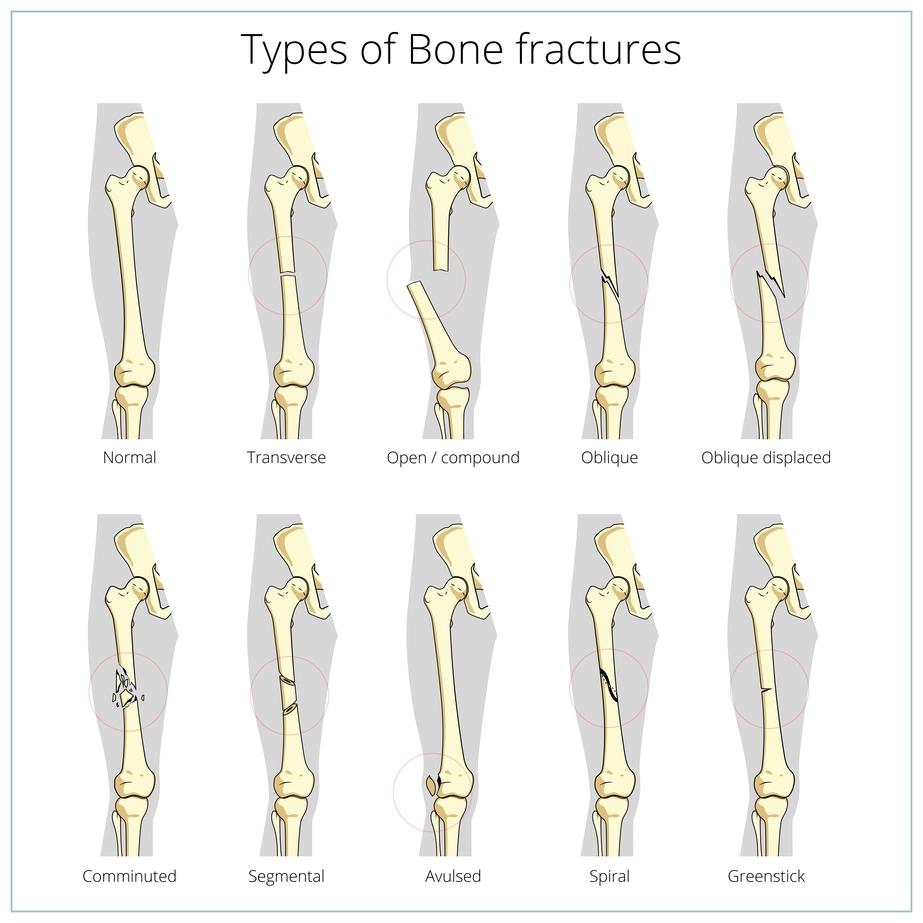
A fracture is a crack or break in a bone.
A fracture can be:
- A small crack
- A partial break
- A complete break
- A displaced fracture, where the bone ends have moved
- A non-displaced fracture, where they remain relatively aligned
- A closed fracture, where the skin remains intact
- An open fracture, where the fracture is associated with an open wound and the bone may be exposed
Some fractures are dramatic and obvious.
Others are surprisingly subtle.
What Is a Sprain?
A sprain happens when a ligament is stretched beyond its normal range or torn.
Ligaments help hold joints together.
Sprains are particularly common in:
- Ankles
- Wrists
- Knees
- Thumbs
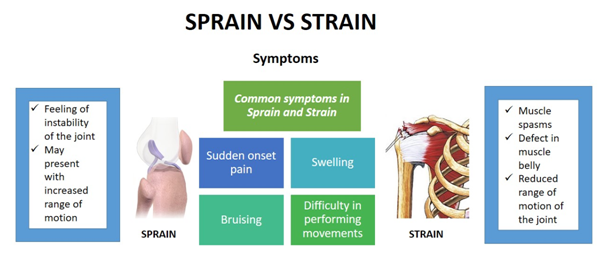
A sprain can cause:
- Pain
- Swelling
- Bruising
- Tenderness
- Difficulty moving the joint
- Difficulty putting weight on it
A severe sprain can sometimes look and feel very similar to a fracture.
What Is a Strain?
A strain affects a muscle or tendon.
Strains are common in:
- Legs
- Feet
- Back
- Muscles used heavily during sports
Typical symptoms include:
- Pain
- Tenderness
- Weakness
- Muscle spasms
- Swelling
- Bruising
- Difficulty using the affected muscle
What Is a Bruise?
A bruise, also called a contusion, usually occurs when an impact damages small blood vessels beneath the skin.
Blood then leaks into surrounding tissues.
The result can be:
- Blue, purple, red or later yellow/green discoloration
- Tenderness
- Mild swelling
- Localized pain
A simple bruise usually does not cause a bone to become deformed or make a limb completely unusable.
However, a fracture and a bruise can occur together, so bruising alone does not rule out a broken bone.
Broken Bone vs Sprain vs Strain vs Bruise
Here is the easiest way to compare them:
| Symptom/sign | Possible fracture | Sprain | Strain | Bruise |
|---|---|---|---|---|
| Pain | Often significant | Often significant | Common | Usually mild–moderate |
| Swelling | Common | Common | Possible | Possible |
| Bruising | Common | Common | Possible | Very common |
| Difficulty moving | Common | Common | Common | Usually mild |
| Cannot put weight on limb | Possible/common | Possible | Possible | Less typical |
| Deformity | Strong warning sign | Unusual | Unusual | No |
| Numbness/tingling | Warning sign | Possible | Less typical | Unusual |
| Bone visible | Emergency | No | No | No |
| Joint instability | Possible | Common | Less typical | No |
| Crack/snap at injury | Possible | Possible | Possible | Less typical |
| X-ray may be needed | Yes | Sometimes | Usually not | Usually not |
Important:
Symptoms alone cannot reliably tell you whether a bone is broken.
A severe sprain can look like a fracture, and some fractures may initially look relatively mild.
What Are the Most Common Signs of a Broken Bone?
A fracture may cause:
- Sudden pain after an injury
- Swelling
- Bruising
- Tenderness directly over the injured bone
- Difficulty moving the area
- Inability to use the limb normally
- Inability to put weight on it
- A visible change in shape
- The limb looking shorter or twisted
- Numbness or tingling
- A crack or snapping sensation
But you do not need to have all of these symptoms.
Some fractures are small cracks and may cause less dramatic symptoms.
Can You Have a Broken Bone and Still Walk?
Yes.
Being able to walk does not prove that the bone is intact.
Some fractures, especially small or stable fractures, may still allow movement or weight-bearing, although it may hurt.
Similarly, being unable to walk does not automatically prove that the bone is broken—severe sprains can also make walking extremely painful.
The important point:
Ability to move the limb is not a reliable fracture test.
Can You Have a Broken Bone Without Much Swelling?
Yes.
Swelling varies according to:
- The type of fracture
- The location
- The tissues involved
- The severity of the injury
Therefore:
No swelling ≠ definitely not broken.
And:
A lot of swelling ≠ definitely broken.
🚨 Signs That Make a Fracture More Concerning
Get urgent medical assessment if:
- The limb is visibly deformed
- It is pointing at an unusual angle
- Bone is visible
- There is a deep wound over the suspected fracture
- The area becomes numb
- There is tingling or pins and needles
- Fingers or toes become pale, blue, grey or unusually cold
- You cannot use the limb because of severe pain
- The injury is associated with severe trauma
These signs can indicate a significant fracture or injury to nerves or blood vessels.
🚨 What If You Hear a Crack?
Hearing or feeling a crack, snap or grinding sensation can occur with a fracture—but it does not prove that a bone is broken.
Because a crack can occur with other injuries too, the surrounding symptoms matter.
However, if you hear a crack and the limb becomes severely painful, deformed or difficult to use, seek urgent medical assessment.
What Should You Do Immediately If You Think a Bone Is Broken?
Until you know what the injury is:
1. Stop using the injured area
Do not keep walking on a potentially fractured leg or repeatedly move an injured arm to “test” it.
2. Keep it still
Support the injured area in the position in which you found it.
Do not try to straighten a deformed limb.
3. Remove rings, watches and tight objects
Swelling can develop quickly, particularly around the hand, wrist or ankle.
4. Cover an open wound
If there is bleeding, apply gentle pressure with a clean dressing or cloth around the wound.
Do not push an exposed bone back inside.
5. Get medical assessment
A suspected fracture may need an X-ray or other imaging.
What NOT to Do If You Suspect a Fracture
Do not:
- Try to straighten the bone
- Push a protruding bone back into the skin
- Massage the injury
- Force the joint to move
- Keep testing whether you can walk
- Continue playing sports
- Put weight on a potentially broken limb
- Give food or drink if an emergency procedure/anesthetic may be required
Keeping a suspected fracture still helps avoid further injury.
What If It Looks More Like a Sprain?
If there is no obvious deformity, no exposed bone, no numbness or circulation problem, and the injury appears consistent with a mild sprain or strain, initial self-care may include:
Protect
Protect the injured area from further injury.
Rest
Temporarily stop activities that increase pain.
Ice
A wrapped cold pack can help reduce pain and swelling.
Do not put ice directly on the skin.
Compression
A suitable bandage or support may help with swelling.
Elevation
Raising the injured limb can help reduce swelling.
This approach is commonly recommended during the first couple of days after a sprain or strain.
Broken Bone or Sprain? What Should You Do?
| Situation | What to do |
|---|---|
| Mild bruise, normal movement | Protect the area and monitor |
| Mild sprain/strain | Rest, protect, cold pack, compression/elevation as appropriate |
| Significant swelling/bruising | Consider medical assessment |
| Severe pain | Seek medical assessment |
| Cannot use the limb normally | Seek medical assessment |
| Cannot bear weight | Get assessed |
| Possible fracture | Keep still and seek medical assessment |
| Deformity | Urgent/emergency care |
| Bone visible | Emergency care |
| Numbness/tingling | Urgent/emergency assessment |
| Blue, pale or cold fingers/toes | Emergency assessment |
| Severe injury to back/neck | Do not move; seek emergency help |
When Do You Need an X-Ray?
You may need an X-ray when a fracture is suspected.
An X-ray can show many fractures, but not every fracture is immediately obvious, and other imaging may sometimes be required.
A healthcare professional may consider:
- Where the pain is
- How the injury happened
- Swelling
- Deformity
- Tenderness
- Ability to move
- Ability to bear weight
- Circulation and nerve function
For some injuries, particularly around the wrist, ankle or foot, it can be difficult to distinguish a fracture from a severe sprain without imaging.
What Happens After a Fracture Is Diagnosed?
Treatment depends on the type and location of the fracture.
Possible treatments include:
- Splint
- Cast
- Brace
- Sling
- Immobilization
- Realignment of the bones
- Surgery
- Physical therapy
- Rehabilitation
A fracture that is properly aligned and stable may require only immobilization.
A displaced or unstable fracture may require the bones to be repositioned and, sometimes, surgery.
How Long Does a Sprain Take to Heal?
It depends on how severe the injury is.
Many mild sprains and strains begin to improve within a couple of weeks, while more severe injuries can take considerably longer.
Do not return immediately to strenuous exercise simply because the pain has improved.
The tissues may still be healing.
How Long Does a Broken Bone Take to Heal?
Healing time varies enormously according to:
- Which bone is broken
- Type of fracture
- Age
- Overall health
- Blood supply
- Smoking
- Nutrition
- Whether the bones are properly aligned
- Whether complications occur
Children often heal fractures more quickly than adults, but the exact time depends on the fracture.
Follow the treating clinician’s instructions rather than using a generic healing timetable.
Nutrition and Supplements After a Fracture
Once a fracture has been diagnosed, nutrition becomes part of the overall healing picture.
The body needs adequate:
- Protein
- Calcium
- Vitamin D
- Other essential nutrients
But this does not mean that taking large doses of calcium, vitamin D or other supplements will automatically make a broken bone heal faster.
The priority is:
proper fracture treatment + adequate nutrition + rehabilitation.
If your diet is inadequate or you have a documented deficiency, supplementation may be appropriate.
Related Nutrient Science Lab guides:
→ Calcium Deficiency: Symptoms, Causes, Supplements & Safety
→ Best Calcium Supplements & Combinations
→ Vitamin D
→ Magnesium
→ Vitamin K
→ Best Supplements for Bone Health
Children’s Zone 👧🧒
Children can be especially difficult to assess after an injury because they may not be able to explain exactly where or how much something hurts.
And children can sometimes have fractures that are different from those seen in adults.
A child may have a broken bone if there is:
- Significant pain
- Swelling
- Bruising
- Difficulty moving the limb
- Refusal to use an arm or leg
- Limping
- Refusal to walk
- A strange angle or deformity
- Significant tenderness
A child does not have to have a dramatic deformity for a fracture to exist.
For example, some fractures in young children can cause pain and refusal to bear weight without an obvious major deformity.
Children’s Fractures Can Be Different
Children’s bones are still growing.
They can therefore experience fracture patterns that are uncommon in adults, including greenstick fractures and other growth-related injuries.
Young children may also develop fractures after relatively minor-looking accidents.
For example, a toddler with a lower-leg fracture may simply:
- Stop walking
- Refuse to put weight on one leg
- Cry when the leg is moved
- Have only a small amount of bruising
There may not always be an obvious dramatic deformity.
So don’t rely on appearance alone.
When Should a Child With an Injury Be Seen Urgently?
Seek urgent medical attention if a child:
- Cannot use an injured arm or leg
- Cannot put weight on an injured leg
- Has severe pain
- Has a limb that looks deformed
- Has a limb pointing at an unusual angle
- Has numbness or tingling
- Has a pale, blue or cold hand/foot
- Has an open wound with possible bone exposure
- Has a serious injury to the head, neck or spine
A child with a suspected neck, spine or pelvis injury should not be moved unnecessarily while emergency help is obtained.
Children’s Sprain vs Fracture
| Sign | Possible fracture | Possible sprain |
|---|---|---|
| Pain | Common | Common |
| Swelling | Common | Common |
| Bruising | Possible | Common |
| Refuses to use limb | Common | Possible |
| Refuses to walk | Possible | Possible |
| Deformity | Strong warning sign | Unusual |
| Numbness/tingling | Warning sign | Possible |
| Bone visible | Emergency | No |
| Need for assessment | Often | Depends on severity |
Important:
You cannot reliably diagnose a fracture in a child at home.
If a child refuses to use a limb after an injury, particularly if there is significant pain or swelling, professional assessment may be appropriate.
What About a Sprained Ankle in a Child?
A child’s ankle sprain can cause:
- Significant swelling
- Bruising
- Pain when walking
- Difficulty moving the ankle
But children can also suffer small avulsion fractures, where a small piece of bone is pulled away where a ligament attaches.
These can sometimes behave much like a sprain and may be treated similarly, but the diagnosis should be made by a healthcare professional.
A Simple Rule for Parents
If your child has an injury and you are thinking:
“I don’t know if this is broken.”
don’t try to prove it by repeatedly moving the limb.
Instead:
Protect → keep it still → avoid putting weight on it → arrange appropriate medical assessment.
Fracture vs Sprain: The Most Important Things to Remember
A fracture can sometimes look mild.
A severe sprain can look dramatic.
Swelling does not prove a fracture.
The ability to move the limb does not rule out a fracture.
Being able to walk does not prove the bone is intact.
A deformity, exposed bone, numbness or abnormal color/coldness is a major warning sign.
When in doubt, get the injury assessed.
Can I tell if a bone is broken without an X-ray?
Not reliably. Some fractures are obvious, but others can look very similar to a severe sprain. Medical assessment and imaging may be necessary.
Can you still walk on a broken foot or ankle?
Sometimes. The ability to walk does not rule out a fracture.
Does swelling mean a bone is broken?
No. Swelling occurs with fractures, sprains, strains and other injuries.
Does bruising mean a bone is broken?
No. Bruising is common with soft-tissue injuries as well as fractures.
Is a sprain worse than a fracture?
Neither is automatically “worse.” A severe sprain can cause major damage, while a small fracture may be relatively stable. The injury needs to be assessed based on its type and severity.
What is the difference between a sprain and a strain?
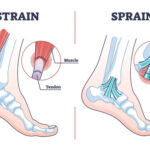
A sprain affects a ligament. A strain affects a muscle or tendon.
Should I massage a new sprain?
Avoid massage during the early stage of an acute sprain or strain, particularly while swelling is increasing.
Should I put ice on a suspected fracture?
A wrapped cold pack may help with pain and swelling while awaiting assessment, but it should not be applied directly to the skin. Do not use ice over an open wound or an area with impaired sensation or circulation.
Should I try to straighten a broken arm or leg?
No. Keep it supported in the position found and seek medical care.
Can children have fractures without obvious deformity?
Yes. Some childhood fractures can cause pain and refusal to use the limb without a dramatic change in shape.
Can supplements heal a broken bone?
Adequate nutrition is important for bone health and healing, but supplements do not replace proper fracture treatment. Correcting a nutrient deficiency may be appropriate when one exists.
Related Guides
Joints & Bone Health
→ Arthritis & Joint Pain: Symptoms, Causes, Treatment & Supplements
→ Back Pain, Sciatica & Neck Pain: Causes, Symptoms, Treatment & What May Help
→ Osteoporosis & Bone Health: Causes, Prevention, Treatment & Supplements
→ Best Joint Support Supplements
→ Best Supplements for Bone Health
Nutrient Guides
→ Calcium Deficiency: Symptoms, Causes, Supplements & Safety
→ Calcium Supplements and Medications: Interactions You Should Know
→ Vitamin D
Medical Disclaimer
Medical Disclaimer: This article is provided for general educational and informational purposes only and does not constitute medical advice, diagnosis or treatment.
It can be difficult to distinguish a fracture from a severe sprain, strain or other injury based on symptoms alone. If you suspect a broken bone, seek appropriate medical assessment.
Seek urgent medical attention for severe pain, significant deformity, exposed bone, numbness or tingling, blue/pale/cold fingers or toes, inability to use the limb, serious trauma or suspected injury to the neck, spine or pelvis.
For children, seek medical advice promptly when an injury causes significant pain, swelling, inability to use a limb, refusal to walk or other concerning symptoms.
Affiliate Disclosure
Some products mentioned on Nutrient Science Lab may be available through affiliate links. If you purchase through an affiliate link, we may receive a commission at no additional cost to you.
Our editorial recommendations are based on ingredient composition, formulation, available evidence, safety and practical considerations. Affiliate relationships do not determine our editorial conclusions.
References
- NHS — Sprains and strains: symptoms, differences between sprains and strains, initial care and warning signs.
- NHS — First aid: guidance for suspected fractures and keeping an injured area still.
- NHS — Broken arm or wrist: symptoms, difficulty distinguishing fracture from severe sprain, X-rays and emergency warning signs.
- NHS — Broken leg: warning signs and what to do while waiting for medical help.
- NHS — What to do if your child has an accident: guidance for suspected fractures and serious injuries in children.
- NHS — Limping in children: injuries, fractures and warning signs requiring assessment.
- Cambridge University Hospitals — Ankle sprains and avulsion fractures in children: distinguishing soft-tissue injuries from small avulsion fractures.
- Royal Free London — Toddler’s fracture: symptoms and presentation of a lower-leg fracture in young children.