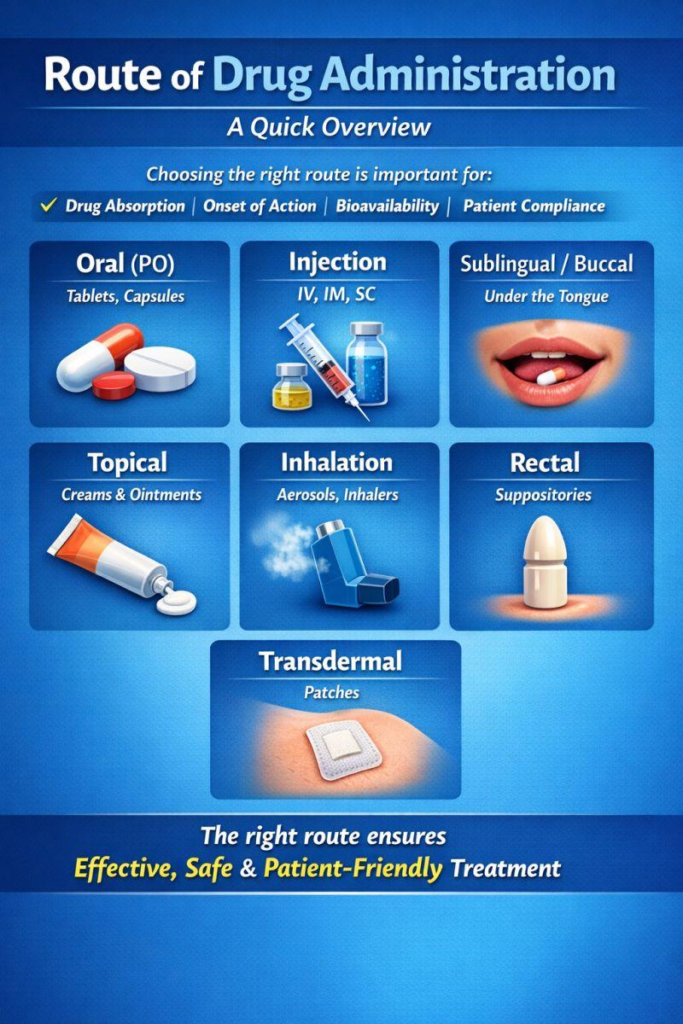
Chronopharmacology, Medication Timing, Meals, Sleep & Different Forms of Medicines
Morning, afternoon or evening — does it really matter when you take a medicine?
Sometimes, yes.
For some medicines, the time of administration can influence effectiveness, side effects, absorption or the way the medicine interacts with the body’s natural biological rhythms.
For others, the most important thing is simply taking the correct dose at the correct interval.
And for some medicines, the relationship with food is more important than the time on the clock.
This is why modern pharmacology has developed a fascinating field called chronopharmacology — the study of how biological rhythms interact with medicines.
But there is one important rule to remember from the beginning:
There is no universal “best time” for all medicines.
The correct timing depends on the medicine, formulation, dose, dosing interval, disease and individual patient.
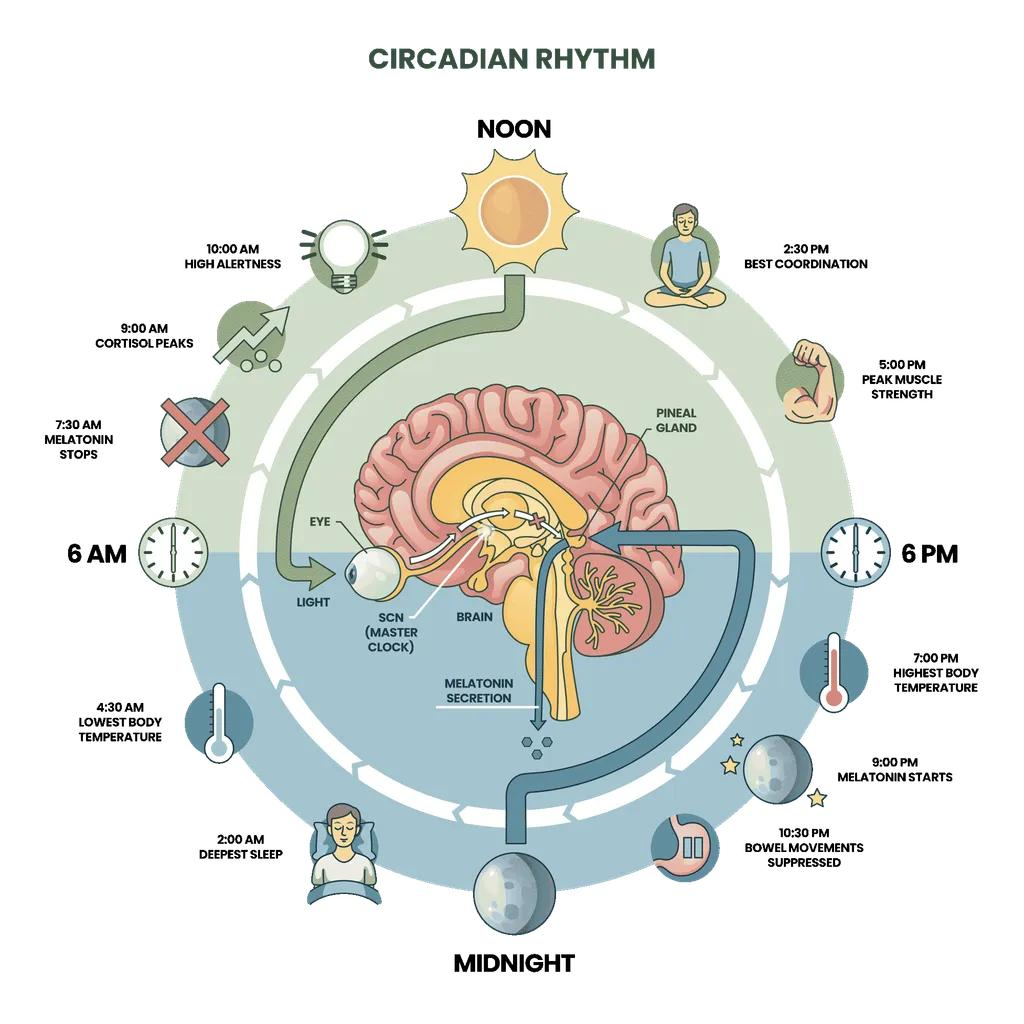
🕐 YOUR BODY DOES NOT WORK AT EXACTLY THE SAME WAY 24 HOURS A DAY
We often think of the body as a machine that works at the same speed from morning until midnight.
It doesn’t.
The human body has an approximately 24-hour biological rhythm — the circadian rhythm.
Many processes change during the day and night, including:
- hormone production
- body temperature
- blood pressure
- heart rate
- digestion
- intestinal movement
- liver enzyme activity
- kidney function
- urine production
- immune activity
- sleep and wakefulness
- glucose metabolism
- nervous-system activity
This doesn’t mean that the body “shuts down” at night.
Your liver, kidneys, heart, brain and other organs continue working while you sleep.
Rather, their activity and the body’s priorities change.
Research has shown that circadian rhythms can influence drug absorption, distribution, metabolism and excretion, as well as the body’s response to drugs.
🧠 WHAT IS CHRONOPHARMACOLOGY?
Chronopharmacology studies how biological timing affects medicines.
Two important areas are:
Chronopharmacokinetics
This looks at how the time of administration can influence what the body does to a medicine:
Absorption → Distribution → Metabolism → Excretion
Chronopharmacodynamics
This looks at how the body’s response to a medicine can change according to biological time.
And then there is chronotherapy — deliberately choosing the timing of treatment when there is evidence that doing so can improve treatment or reduce unwanted effects.
The science is not new. Research into circadian influences on pharmacology has been going on for decades, although many practical applications are still being investigated.
🕐 WHICH ORGANS AND PHYSIOLOGICAL PROCESSES ARE MORE ACTIVE DURING THE DAY OR NIGHT?
The following table gives a simple picture of normal circadian physiology.
It is not a prescription timetable.
| Organ / system | 🌞 Waking/day | 🌙 Sleeping/night | Why it may matter for medicines |
|---|---|---|---|
| 🧠 Brain & nervous system | Alertness, attention, movement and sensory processing are generally higher | Sleep regulation, memory consolidation and different autonomic patterns dominate | Timing can matter for medicines affecting sleep, alertness or the nervous system |
| ❤️ Heart & cardiovascular system | Heart rate, blood pressure and cardiovascular activity generally rise with waking and activity | Heart rate and blood pressure usually fall during sleep | May matter for some cardiovascular medicines |
| 🩸 Blood vessels | Vascular tone changes with activity, posture and sympathetic stimulation | Different autonomic and vascular patterns occur during sleep | May influence blood-pressure responses |
| 🫁 Lungs | Breathing generally increases with activity | Breathing pattern changes during sleep | Important for some respiratory medicines |
| 🍽️ Stomach | Food stimulates gastric activity | No food during normal sleep; gastric activity changes | Can influence oral drug absorption |
| 🦠 Intestines | Digestion, absorption and motility are strongly influenced by meals | Motility changes during fasting and sleep | Can influence oral absorption |
| 🧫 Liver | Continuously metabolizes medicines and nutrients | Continues functioning, with some metabolic pathways showing rhythmic activity | Can affect metabolism of some medicines |
| 🧪 Pancreas | Insulin secretion is strongly related to meals and glucose | Glucose regulation continues during fasting | Important for insulin and diabetes medicines |
| 🦋 Thyroid | Hormonal regulation follows circadian patterns | Hormonal activity continues | Food and timing can matter for thyroid medicines |
| 🧠 Hypothalamus / pituitary | Coordinates daily hormonal rhythms | Controls sleep- and hormone-related rhythms | Important for hormone treatments |
| 🌅 Adrenal glands | Cortisol normally rises toward morning | Cortisol normally falls during the night | Particularly important for corticosteroids |
| 🧂 Kidneys | Filtration and urine production are influenced by fluid intake, posture and activity | Urine production normally decreases during sleep | May influence elimination of some medicines |
| 💧 Bladder | Fills as urine is produced | Normally stores urine for several hours | Relevant to diuretics and urinary medicines |
| 🌡️ Body temperature | Generally higher during waking/activity | Normally falls during sleep | Temperature itself follows a circadian rhythm |
| 🍬 Glucose metabolism | Strongly influenced by meals and activity | Fasting metabolism predominates | Important for diabetes/metabolic treatment |
| 💪 Muscles | Activity and energy expenditure are higher | Muscles rest while recovery continues | Relevant to some pain/metabolic treatments |
| 🦴 Bone | Bone is continuously remodeled | Remodeling continues during sleep | More relevant to long-term treatment |
| 🛡️ Immune system | Immune activity changes throughout the day | Immune-cell trafficking and inflammatory signals also change | Potentially relevant to selected immune therapies |
| 🧬 Cells | Cell-cycle activity varies by tissue | Repair and other processes continue during sleep | Important mainly in specialized chronotherapy |
| 🧴 Skin | Barrier function, temperature and blood flow vary | Skin temperature, blood flow and barrier properties change | May matter for some dermatological treatments |
| 👁️ Eyes | Vision and light exposure dominate | Eyes are closed; darkness affects circadian signaling | Relevant to sleep and some ophthalmic treatments |
| 🌙 Melatonin system | Bright light suppresses melatonin | Darkness promotes melatonin secretion | Important for sleep-related treatments |
🌞 DAY VS 🌙 NIGHT — THE SIMPLE VERSION
| Physiological process | 🌞 Waking/day | 🌙 Sleeping/night |
|---|---|---|
| Alertness | ↑ | ↓ |
| Physical activity | ↑ | ↓ |
| Food intake | Usually ↑ | Usually ↓ / absent |
| Digestion | ↑ after meals | Changes during fasting |
| Heart rate | Usually ↑ | Usually ↓ |
| Blood pressure | Usually ↑ | Usually ↓ |
| Cortisol | Higher toward morning | Lower during night |
| Melatonin | Low with daylight | Higher in darkness |
| Body temperature | Generally higher | Generally lower |
| Urine production | Generally higher | Generally lower |
| Glucose regulation | Meal/activity driven | Fasting physiology |
| Muscle activity | ↑ | ↓ |
| Sleep-related restorative processes | — | ↑ |
↑ = generally higher; ↓ = generally lower.
These are general physiological patterns, not absolute rules.
⚠️ VERY IMPORTANT: THE BODY DOES NOT SIMPLY “SLOW DOWN” AT NIGHT
It is tempting to think:
“I am asleep, therefore my metabolism slows down, so the medicine stays in my blood longer.”
That is too simple.
Some physiological processes do change during sleep, but drug levels are determined by many factors:
- the medicine’s half-life
- absorption
- distribution
- liver metabolism
- kidney elimination
- protein binding
- transporters
- formulation
- dose
- food
- other medicines
- age
- kidney and liver function
- genetics
- disease
Circadian changes can matter, but they do not mean that every medicine is automatically stronger or longer-lasting at night.
⏰ WHY DOES MEDICATION TIMING MATTER?
The correct question is not:
“Is metabolism faster during the day?”
The better question is:
“Does this particular medicine interact with a physiological process that changes during the 24-hour cycle?”
For some medicines, yes.
For others, the time of day makes little clinically important difference.
And for some, the relationship to food or the exact dosing interval is much more important than morning versus evening.
💊 “THREE TIMES DAILY” IS NOT ALWAYS THE SAME AS “EVERY 8 HOURS”
This is a surprisingly important distinction.
A prescription saying:
“Take three times daily”
may be intended to distribute doses through the patient’s waking day.
A prescription saying:
“Take every 8 hours”
specifies an interval between doses.
These instructions should not automatically be treated as identical.
For some medicines, maintaining appropriate exposure over time is important.
Changing the interval can change:
- blood concentrations
- effectiveness
- side effects
- the period during which the medicine is active
Therefore:
Never automatically change “three times daily” into “every 8 hours” — or the reverse — without checking the prescription instructions.
🍽️ FOOD CAN BE MORE IMPORTANT THAN THE CLOCK
Food can affect:
- stomach emptying
- stomach acidity
- intestinal movement
- dissolution of tablets
- absorption
- metabolism
- blood concentrations
Some medicines should be taken:
with food
Some:
before food
Some:
after food
Some:
on an empty stomach
And some can be taken regardless of meals.
Therefore:
“Take it in the morning” and “take it before breakfast” are not necessarily the same instruction.
🏃 ACTIVITY CAN ALSO CHANGE PHYSIOLOGY
During physical activity:
- heart rate increases
- blood flow changes
- muscles use more glucose
- sweating may increase
- fluid balance changes
- gastrointestinal activity may change
But:
More activity does not automatically mean faster drug elimination.
The effect depends on the specific medicine and the person’s physiology.
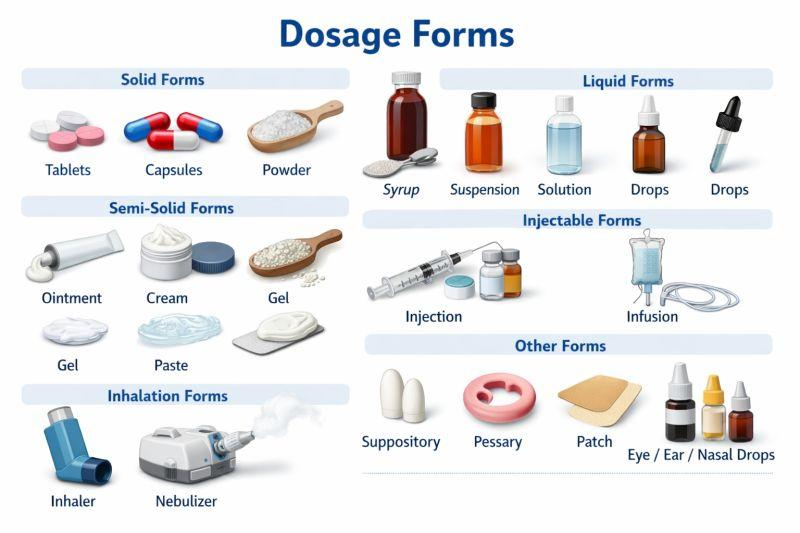
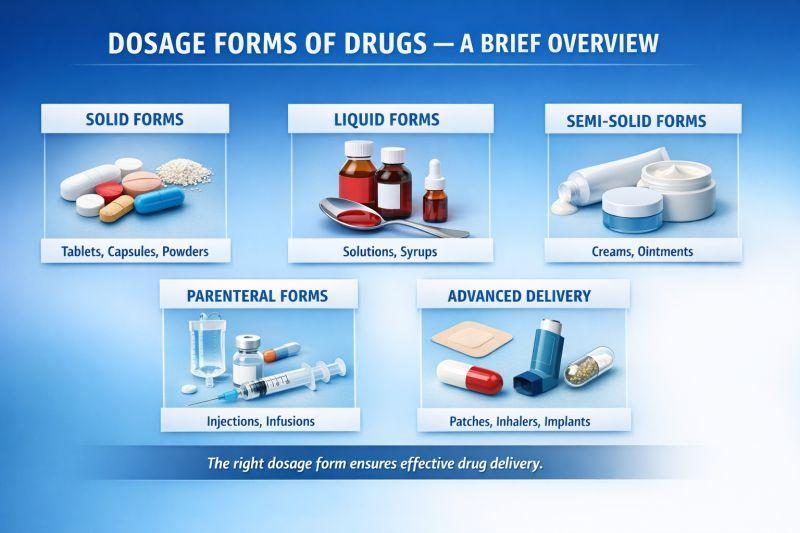
💊 THE FORM OF THE MEDICINE MATTERS
When we talk about medication timing, we should not think only about tablets.
Medicines and supplements can be supplied as:
- tablets
- capsules
- oral liquids
- oral drops
- chewable tablets
- effervescent tablets
- soluble/dispersible preparations
- orally disintegrating tablets
- sublingual tablets
- buccal tablets or films
- lozenges
- enteric-coated tablets
- extended-release tablets
- creams
- ointments
- gels
- lotions
- foams
- transdermal patches
- nasal sprays
- inhalers
- nebulized medicines
- eye drops
- ear drops
- suppositories
- enemas
- vaginal preparations
- injections
- infusions
- depot injections
- implants
The formulation is part of the treatment.
💧 ORAL DROPS — A SMALL VOLUME CAN CONTAIN A FULL DOSE
Oral drops are medicines or supplements designed to be administered by mouth in a small, measured volume.
They are particularly useful when:
- only a small dose is needed
- a liquid is easier to administer
- a tablet cannot be swallowed
- the dose needs to be adjusted for age or weight
They are especially common in babies and young children.
⚠️ One important rule
Never assume that one drop equals the same amount of active ingredient in another product.
Different products can have completely different concentrations.
Therefore:
10 drops of Product A may contain a completely different dose from 10 drops of Product B.
Always read the label and use the supplied dropper or measuring device.
🍼 BABY VITAMIN D DROPS — A PERFECT EXAMPLE
Vitamin D is commonly supplied to babies as oral drops.
But there is an important point that parents sometimes overlook:
The number of drops is product-specific.
One product may provide the recommended amount in one drop, while another may require a different number of drops.
Current HSE guidance, for example, tells parents to check the label because the number of drops can vary between supplements and advises giving the correct dose directly into the baby’s mouth.
NHS guidance similarly recognizes vitamin-D drops as a common form for babies and gives country-specific recommendations for supplementation.
👶 What about “licking” the drop?
Some parents and some local practices describe putting a drop where the baby can lick it.
However, this should not be presented as a universal method.
The safest general advice is:
Follow the instructions for the specific vitamin-D product. If the label says to give the drops directly into the baby’s mouth, use that method.
The exact dose and administration method can differ between products and countries.
⚠️ And remember:
One drop is not “just a little liquid.”
It can contain the entire intended dose.
Never increase the number of drops because you think a small amount cannot matter.
🌿 VALERIAN — AN EXCELLENT EXAMPLE OF WHY TIMING MATTERS
Valerian (Valeriana officinalis) is used in some herbal medicinal preparations for mild nervous tension and to aid sleep.
This makes it a useful example for explaining medication timing to the average reader.
Some valerian preparations are traditionally used during the day for mild nervous tension, while sleep-related preparations are taken in the evening, commonly about 30–60 minutes before bedtime, depending on the formulation. The EMA monograph gives different administration schedules for these uses.
🌞 During the day
The purpose may be:
relief of mild nervous tension / calming
🌙 In the evening
The purpose may be:
relaxation and support for sleep
🛏️ Before bedtime
For appropriate preparations, the EMA monograph describes a dose approximately half an hour to one hour before bedtime.
But here is the important scientific distinction:
It would be wrong to say:
“Valerian becomes a sedative in the morning and a sleeping medicine at night.”
The pharmacological action does not magically change when the clock reaches evening.
Rather, the timing changes the context and the desired effect.
And valerian products are not all identical. Evidence for sleep benefits also varies according to the preparation. The EMA recognizes specific preparations for sleep-related use, while some uses are based on traditional rather than strong clinical evidence.
Valerian medicines can also cause drowsiness, so people should be cautious about driving or operating machinery.
⚠️ Children
The EMA does not recommend valerian-root medicines for children under 12 years of age.
🫧 EFFERVESCENT MEDICINES AND SUPPLEMENTS
Effervescent products are designed to be dissolved in water before administration.
The familiar fizz occurs because ingredients react in water and release carbon dioxide.
Usually:
Effervescent tablet/powder → dissolve in water → allow it to finish reacting → drink as directed.
⚠️ Effervescent does not automatically mean “faster”
Being dissolved in water can change the way a product is presented and administered, but it does not automatically mean that every effervescent medicine works faster than every conventional tablet.
The active ingredient and formulation still determine absorption.
🫧 SODIUM IN EFFERVESCENT MEDICINES AND SUPPLEMENTS: THE HIDDEN SALT
Effervescent tablets are convenient: drop the tablet into water, let it dissolve, and drink.
But there is something many people do not realize:
Some effervescent and soluble medicines and supplements contain a significant amount of sodium.
The sodium may be there because sodium-containing ingredients help the tablet dissolve, disintegrate or remain soluble. Sodium can also be part of the active ingredient itself.
This does not mean that effervescent products are unsafe for everyone.
For a healthy person using an effervescent product occasionally, the sodium may be of little practical importance.
The situation is different when someone:
- uses the product every day
- takes it several times a day
- uses several sodium-containing medicines or supplements
- follows a low-sodium or low-salt diet
- has high blood pressure
- has heart failure
- has kidney impairment
- has swelling caused by fluid retention
- has liver cirrhosis with fluid retention
- has been specifically advised to restrict sodium
The NHS Specialist Pharmacy Service lists hypertension, heart failure, oedema, renal impairment, pre-eclampsia and liver cirrhosis among situations in which sodium from medicines deserves particular consideration.
🧂 WHY IS SODIUM USED IN EFFERVESCENT PRODUCTS?
Sodium can appear in medicines in several different ways.
It may be:
1. An active ingredient
For example:
- sodium bicarbonate
- sodium chloride
Here, sodium is deliberately part of the treatment.
2. Part of the active drug
Some medicines are supplied as a sodium salt of the active molecule.
For example, a medicine may be described as a sodium salt even though the therapeutic ingredient is not being taken for its sodium content.
3. An excipient
An excipient is an ingredient that helps manufacture or deliver the medicine but is not the main therapeutic ingredient.
Sodium-containing excipients may help with:
- solubility
- disintegration
- formulation
- stability
- other manufacturing functions.
4. Part of the effervescent system
The chemistry that produces the familiar fizz commonly involves sodium-containing ingredients.
So the fact that a product contains sodium does not necessarily mean that “salt was added” simply to make it taste salty.
⚠️ HOW MUCH SODIUM CAN THERE BE?
This is where the issue becomes important.
There is no single sodium amount for all effervescent medicines.
The amount can vary enormously between:
- brands
- formulations
- active ingredients
- countries
- doses
- different versions of the same medicine
A 2023 study examining effervescent dietary supplements and OTC medicines found substantial variation in sodium content. In the dietary supplements studied, the average sodium content was about 284 mg per tablet, although individual products varied considerably. Vitamin products had the highest mean sodium content in that study, approximately 378 mg per tablet.
This means that:
“Effervescent” tells you how the product is administered — it does not tell you how much sodium it contains.
You have to check the individual product.
🧂 SODIUM IS NOT THE SAME AS SALT
This causes considerable confusion.
Sodium is one component of table salt.
Table salt is:
sodium chloride = sodium + chloride
The NHS Specialist Pharmacy Service gives the useful conversion:
- 1 mmol sodium = 23 mg sodium
- 1 g salt (sodium chloride) ≈ 400 mg sodium
So when a label gives the amount of sodium, do not automatically read that number as the amount of table salt.
Example
If a product contains:
400 mg sodium
that corresponds to approximately:
1 gram of salt equivalent
This distinction is important when comparing medicine labels with dietary salt recommendations.
❤️ WHEN DOES THE SODIUM IN AN EFFERVESCENT PRODUCT REALLY MATTER?
1. HIGH BLOOD PRESSURE
Sodium contributes to fluid balance, and excessive sodium intake can contribute to increased blood pressure in susceptible people.
For someone with hypertension, an effervescent medicine containing a substantial amount of sodium may therefore add to the person’s overall sodium intake.
This is especially relevant when the medicine is taken regularly rather than once.
The NHS Specialist Pharmacy Service specifically recommends considering medicine-related sodium in people with hypertension and those requiring sodium restriction.
❤️ 2. HEART FAILURE
This is one of the situations where sodium deserves particular attention.
People with heart failure may have difficulty handling excess fluid.
Sodium can contribute to fluid retention, and patients may therefore be given individualized advice about sodium and fluid intake.
A sodium-containing effervescent medicine can become an additional, easily overlooked source of sodium.
The issue becomes more important when:
- the product is used every day
- several sodium-containing products are used
- the person already follows a sodium-restricted diet
- there is significant fluid retention
The NHS specifically lists heart failure among the conditions in which sodium from medicines should be considered.
🫘 3. KIDNEY DISEASE OR REDUCED KIDNEY FUNCTION
The kidneys are major regulators of sodium and fluid balance.
When kidney function is impaired, the body’s ability to handle sodium can be altered.
Therefore, a person with kidney disease may have been given a specific sodium restriction.
In such a person, an apparently harmless daily effervescent supplement may contribute to the total sodium burden.
The NHS Specialist Pharmacy Service specifically includes renal impairment among the situations in which medication sodium should be considered.
🦵 4. SWELLING AND FLUID RETENTION
People with:
- ankle swelling
- leg oedema
- fluid retention
- pulmonary oedema
may be particularly sensitive to changes in sodium and fluid balance, depending on the underlying cause.
This does not mean that sodium is necessarily the cause of the swelling.
Rather:
If a person has a medical condition involving fluid retention, unnecessary additional sodium may be undesirable.
🫀 5. LIVER CIRRHOSIS
Advanced liver disease can be associated with fluid accumulation, including:
- ascites
- leg oedema
People with cirrhosis may therefore receive individualized sodium-restriction advice.
Again, sodium from medicines should be counted as part of the overall sodium exposure.
The NHS Specialist Pharmacy Service specifically lists liver cirrhosis among conditions where medication sodium may matter.
🤰 6. PREGNANCY — WHEN DOES IT MATTER?
Pregnancy itself does not mean that every woman must avoid sodium-containing effervescent products.
However, sodium intake and fluid balance can become clinically relevant in pregnancy when a woman has conditions such as hypertension or pre-eclampsia, or has been given specific dietary restrictions.
The NHS Specialist Pharmacy Service lists pre-eclampsia among conditions where medication sodium deserves consideration.
Pregnant women should therefore follow their clinician’s advice rather than assuming that an effervescent supplement is automatically appropriate.
👴 7. OLDER ADULTS
Older adults may be more likely to:
- take several medicines
- have hypertension
- have heart or kidney disease
- follow a restricted-sodium diet
They may also unknowingly use several soluble or effervescent products at the same time.
This creates an important principle:
The sodium from several products can add up.
💊 THE “MULTIPLE EFFERVESCENTS” PROBLEM
Imagine someone taking:
Morning: effervescent multivitamin
Lunch: effervescent calcium
Afternoon: soluble painkiller
Evening: effervescent magnesium
Each product might appear harmless when considered individually.
But the person is no longer taking one effervescent product.
They are taking four potential sources of sodium.
The EMA specifically highlighted the possibility that people who prefer medicines that dissolve may take several dissolvable products, creating a significant cumulative sodium exposure.
🧂 A SIMPLE EXAMPLE
Suppose, purely as an illustration, that one effervescent tablet contains:
300 mg sodium
Taking:
1 tablet/day → 300 mg sodium
Taking:
3 tablets/day → 900 mg sodium
Taking several different products can therefore create a substantial additional sodium intake.
And remember:
This is sodium from medicines/supplements — before counting the sodium in food.
The actual amount must always be taken from the product label.
🩺 WHY THIS MATTERS MORE FOR SOME PEOPLE THAN OTHERS
| Person | Sodium in occasional effervescent product | Regular/high-dose use |
|---|---|---|
| Healthy adult | Usually less concerning | Check total intake |
| Hypertension | Worth checking | More important |
| Heart failure | Important | Very important |
| Kidney impairment | Important | Very important |
| Fluid retention/oedema | Worth discussing | More important |
| Liver cirrhosis | Worth discussing | More important |
| Low-sodium diet | Important | Very important |
| Older adult with multiple medicines | Check label | Particularly important |
| Baby/young child | Product-specific | Medical advice if relevant |
| Pregnant person with pre-eclampsia | Important | Medical advice |
| Healthy adult, occasional use | Usually lower concern | Depends on amount |
💊 MEDICINE OR SUPPLEMENT? THE SAME PRINCIPLE APPLIES
Don’t assume that because something is sold as a food supplement rather than a medicine, sodium is irrelevant.
A 2023 study found substantial sodium levels in a range of effervescent dietary supplements as well as OTC medicines.
This is particularly relevant to:
- effervescent vitamins
- effervescent minerals
- calcium preparations
- magnesium preparations
- electrolyte products
- painkillers
- cold and flu products
- antacid preparations
- urinary alkalinizers
The sodium content varies considerably.
🔍 WHAT SHOULD YOU LOOK FOR ON THE LABEL?
Look for:
Sodium
or ingredients such as:
- sodium bicarbonate
- sodium carbonate
- sodium citrate
- sodium chloride
- sodium-containing forms of active ingredients
However, the presence of the word “sodium” in an ingredient name does not by itself tell you how much sodium you are consuming.
The actual quantity per tablet, sachet, dose or maximum daily dose is what matters.
⚠️ THE MAXIMUM DAILY DOSE MATTERS MORE THAN ONE TABLET
This is an important point that is easy to miss.
Suppose a product contains:
250 mg sodium/tablet
That might not sound like much.
But if the directions allow:
2 tablets, 3 times daily
the potential daily sodium exposure is:
250 × 6 = 1,500 mg sodium/day.
Therefore, when assessing a medicine:
Don’t look only at sodium per tablet. Look at sodium at the maximum recommended daily dose.
The EMA has highlighted that some effervescent medicines can reach very high sodium exposure at their maximum daily dose.
🧂 WHAT ABOUT THE DAILY SALT LIMIT?
For general adult dietary guidance, the NHS states that adults should consume no more than 6 g of salt per day, approximately one level teaspoon. This corresponds to roughly 2.4 g of sodium.
But this should not be interpreted as a universal medical target for every individual.
People with conditions such as heart failure, kidney disease or hypertension may have individualized recommendations.
And importantly:
Sodium from medicines and supplements contributes to total sodium exposure.
🫧 SHOULD EVERYONE AVOID EFFERVESCENT PRODUCTS?
No.
That would be an unnecessary and misleading conclusion.
Effervescent formulations can be very useful, particularly for people who:
- have difficulty swallowing tablets
- prefer liquid administration
- need a soluble preparation
- find conventional tablets difficult to take
The important question is:
Does this particular product contain a meaningful amount of sodium, and does that matter for this particular person?
🔄 CAN I CHOOSE A NON-EFFERVESCENT VERSION?
Often, there may be alternative formulations of the same or a similar active ingredient:
effervescent → tablet
effervescent → capsule
effervescent → powder
effervescent → liquid
But they are not automatically interchangeable.
The dose, absorption, excipients and instructions can differ.
For someone who needs to restrict sodium, a pharmacist can often help identify a suitable lower-sodium alternative.
The NHS Specialist Pharmacy Service specifically recommends considering alternative formulations when sodium exposure from an effervescent, soluble or dispersible product is likely to be clinically significant.
⚠️ A VERY IMPORTANT DISTINCTION ABOUT THE CARDIOVASCULAR RESEARCH
There has been research associating sodium-containing effervescent, soluble and dispersible medicines with cardiovascular outcomes.
One large observational study found an association between exposure to sodium-containing formulations and certain cardiovascular outcomes.
However:
An association does not prove that the sodium-containing medicine caused the cardiovascular event.
People prescribed certain effervescent medicines may already have had health conditions that increased their cardiovascular risk.
The EMA’s review itself discussed limitations of the evidence, including the inability to fully account for dietary sodium and differences between short-term and long-term medicine use.
So the scientifically responsible message is:
Don’t panic about an occasional effervescent tablet.
But:
Don’t ignore a substantial sodium load from a medicine used every day, especially if you have a condition requiring sodium restriction.
🧠 THE NUTRIENTSCIENCELAB TAKE-HOME MESSAGE
🫧 Effervescent does not automatically mean unhealthy.
But:
🧂 Effervescent does not automatically mean sodium-free.
For most healthy adults using an effervescent product occasionally, the sodium content may not be a major concern.
For someone with:
❤️ heart failure
🫘 kidney disease
🩸 hypertension
🦵 fluid retention
🫀 liver disease with fluid accumulation
🥗 a medically prescribed low-sodium diet
the sodium content may deserve much more attention.
And if several effervescent or soluble products are used every day:
Add them together.
The best habit is simple:
CHECK THE SODIUM PER DOSE × NUMBER OF DAILY DOSES.
Then consider it together with the sodium coming from food and other medicines.
👄 SUBLINGUAL MEDICINES
Sublingual means “under the tongue.”
The medicine is placed under the tongue and absorbed through the oral mucosa.
This is different from an ordinary tablet that is swallowed.
Do not confuse:
Sublingual ≠ orally disintegrating
An orally disintegrating tablet may dissolve in the mouth and then be swallowed.
A sublingual product is specifically designed for administration under the tongue.
👄 BUCCAL MEDICINES
Buccal means against the inside of the cheek.
A buccal tablet or film is designed to remain against the cheek and release medicine through the oral mucosa.
Therefore:
Buccal ≠ sublingual ≠ conventional oral tablet.
🍬 LOZENGES AND TROCHES
Some medicines are designed to dissolve slowly in the mouth.
They may work:
- locally in the mouth/throat
- systemically after absorption
The instructions matter because swallowing the product immediately can change how it works.
⚠️ DO NOT CRUSH OR CHEW EVERY TABLET
Some tablets are deliberately designed to release their contents:
- slowly
- gradually
- after leaving the stomach
- in a particular part of the intestine
Crushing or chewing such a product can alter its release.
Therefore:
Never assume that a tablet can be crushed, chewed, dissolved or split simply because another tablet can.
Ask a pharmacist if you are unsure.
🧴 CREAMS, OINTMENTS, GELS AND LOTIONS
Topical medicines are generally applied directly to the skin.
They can be used for:
- eczema
- dermatitis
- fungal infections
- acne
- inflammation
- localized pain
- other skin conditions
But “topical” does not always mean “zero absorption into the bloodstream.”
Absorption can depend on:
- the medicine
- concentration
- area treated
- frequency
- duration
- condition of the skin
- damaged skin
- inflammation
- occlusion
This is particularly important when potent medicines are applied over large areas or for prolonged periods.
🩹 TRANSDERMAL PATCHES
A transdermal patch is different from a cream.
It is designed to deliver medicine through the skin into the bloodstream, often over an extended period.
Examples include selected:
- hormone therapies
- cardiovascular medicines
- pain medicines
- smoking-cessation medicines
- neurological treatments
Timing matters because the patch itself controls delivery.
The patient may need to:
- apply it at a specific interval
- replace it at a specific time
- remove the old patch before applying another
- rotate application sites
⚠️ Never cut a patch unless the manufacturer specifically says it can be cut.
Many patches are designed as controlled-delivery systems, and altering them can change drug delivery. Product-specific labeling commonly warns against cutting patches.
💉 INJECTIONS ARE NOT ALL THE SAME
“Injection” is a broad term.
Subcutaneous — SC
Under the skin.
Intramuscular — IM
Into muscle.
Intravenous — IV
Directly into a vein.
Intradermal
Into the skin.
Intra-articular
Into a joint.
Intrathecal
Into cerebrospinal fluid.
These routes can produce very different patterns of drug exposure.
⚡ IV MEDICINES
An intravenous medicine enters the bloodstream directly.
There is no conventional gastrointestinal absorption step.
For many medicines, this can produce rapid systemic availability.
Therefore:
dose + concentration + infusion rate + interval
can all be clinically important.
An IV dose cannot simply be compared milligram-for-milligram with an oral dose.
💉 DEPOT INJECTIONS
Some injections are formulated as depot preparations.
Instead of releasing the entire dose immediately, they create a reservoir from which the medicine is released gradually.
The effect may last:
days → weeks → months
depending on the product.
This is why a depot injection is not equivalent to taking the same medicine as a tablet every day.
🫁 INHALED MEDICINES
Inhaled medicines deliver the active ingredient to the respiratory tract.
They include:
- inhalers
- nebulized medicines
- other pulmonary preparations
Some act mainly in the lungs.
Others can produce significant systemic effects.
Correct inhaler technique can therefore be just as important as the prescribed dose.
👃 NASAL MEDICINES
Nasal preparations include:
- sprays
- drops
- gels
- powders
They may act locally or be designed for systemic absorption.
Nasal congestion and the condition of the nasal mucosa can influence delivery.
👁️ EYE MEDICINES
Eye medicines include:
- drops
- gels
- ointments
They are generally designed for local ocular treatment.
However, some medicine can drain through the tear ducts and enter systemic circulation.
So:
“It’s only an eye drop” does not necessarily mean systemic effects are impossible.
👂 EAR MEDICINES
Ear drops and other otic medicines are generally intended for local treatment.
The appropriate product depends on the diagnosis and the condition of the eardrum.
🚽 RECTAL MEDICINES
Rectal medicines include:
- suppositories
- enemas
- foams
- creams
- gels
Some act locally.
Others can be absorbed systemically.
The absorption pattern can differ from ordinary oral administration.
🌸 VAGINAL MEDICINES
Vaginal medicines include:
- tablets
- pessaries
- creams
- gels
- rings
- suppositories
Some are designed mainly for local treatment.
Others can produce systemic exposure.
Again:
The route is part of the treatment.
🧬 LONG-ACTING MEDICINES
Some medicines are deliberately designed to release their active ingredient slowly.
This can be achieved through:
- patches
- depot injections
- implants
- extended-release tablets
- modified-release capsules
- specialized delivery systems
The purpose may be to maintain exposure for longer and reduce the need for frequent dosing.
📊 MEDICINE FORM AND TIMING — QUICK COMPARISON
| Form | Food usually relevant? | Timing considerations |
|---|---|---|
| Conventional tablet | Sometimes | Dose interval + food |
| Capsule | Sometimes | Dose interval + food |
| Oral liquid | Sometimes | Dose measurement + food |
| Oral drops | Product-dependent | Exact number of drops + concentration |
| Chewable tablet | Product-dependent | Correct administration |
| Effervescent 🫧 | Product-dependent | Preparation + food + sodium |
| Orally disintegrating | Usually less | Correct oral administration |
| Sublingual | Usually less | Correct placement under tongue |
| Buccal | Usually less | Correct placement against cheek |
| Enteric-coated | Often important | Must usually remain intact |
| Extended-release | Product-dependent | Must usually remain intact |
| Cream/ointment | Usually no | Local application schedule |
| Transdermal patch | No | Application/replacement schedule |
| Inhaler | Usually less | Interval + technique |
| Nasal medicine | Usually less | Interval + nasal condition |
| Eye drops | Usually no | Correct interval |
| Injection | No | Exact dosing interval |
| IV infusion | No | Dose + infusion rate + interval |
| Depot injection | No | Long-acting schedule |
| Implant | No | Long-term controlled release |
👶 CHILDREN ARE NOT JUST SMALL ADULTS
Children undergo developmental changes in:
- body water
- body fat
- liver enzyme activity
- kidney function
- drug transport
- protein binding
- gastrointestinal function
- receptor sensitivity
These differences can affect both pharmacokinetics and pharmacodynamics.
Newborns and young infants can be particularly different from older children and adults.
🍼 BABIES NEED PARTICULAR CARE
For babies, the formulation can be as important as the dose.
A baby may not be able to:
- swallow a conventional tablet
- use an inhaler independently
- hold a sublingual medicine correctly
- safely manage a transdermal patch
Therefore, pediatric medicines may be supplied as:
- oral solutions
- suspensions
- drops
- dispersible preparations
- age-appropriate tablets
- suppositories
- inhaled preparations
- injections
🍼 BABY MEDICINES: NEVER GUESS FROM THE NUMBER OF DROPS
This is particularly important with concentrated products.
For example:
Vitamin D drops
may contain very different amounts of vitamin D per drop depending on the product.
Current Irish HSE guidance explicitly tells parents to check the label because the number of drops can vary between products and to give the correct dose directly into the baby’s mouth.
NHS guidance also recommends vitamin-D supplementation for certain babies and emphasizes using age-appropriate products and doses.
Therefore:
Never copy the number of drops from another brand.
🌿 MEDICINES AND SUPPLEMENTS CAN HAVE DIFFERENT “TIMES OF USE”
The valerian example illustrates something important.
A substance can have an effect that is useful at one time and undesirable at another.
For example:
🌞 Valerian during the day
May be used in appropriate preparations for mild nervous tension.
🌙 Valerian in the evening
May be used in appropriate preparations to aid sleep.
The clock doesn’t transform valerian into a different substance.
Rather, the timing determines whether its calming effect is desirable during waking hours or useful before sleep. The EMA’s monograph specifies different administration patterns for these purposes.
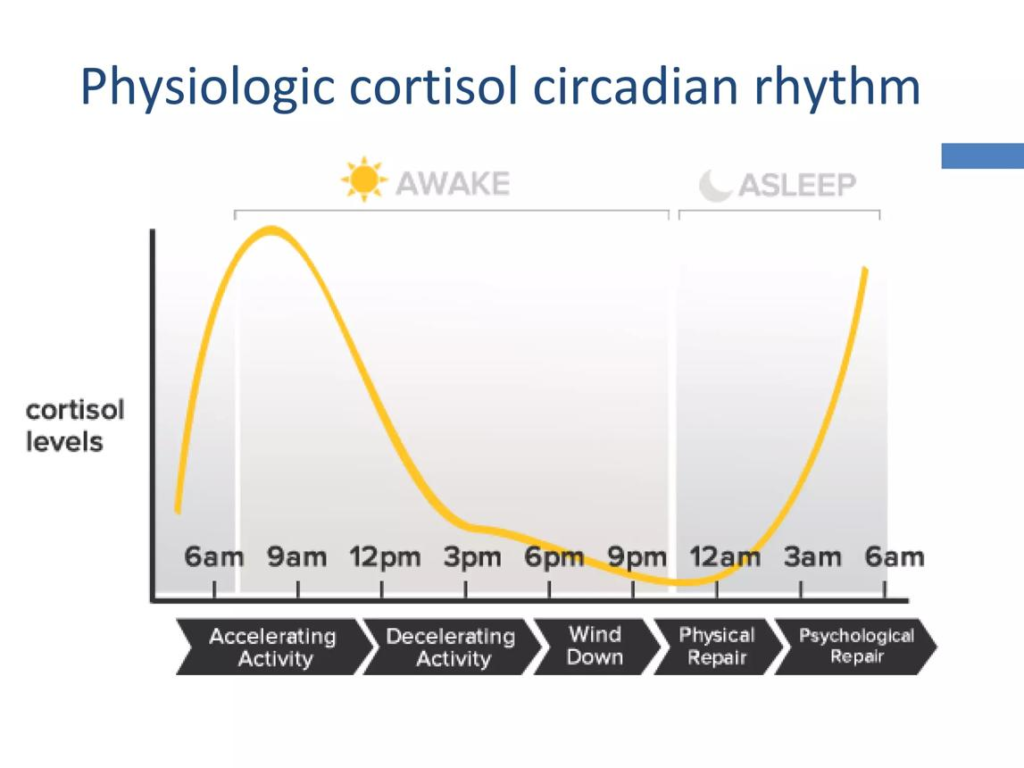
🌅 CORTICOSTEROIDS — ONE OF THE BEST EXAMPLES OF BODY CLOCK + MEDICINE
Natural cortisol follows a strong circadian pattern.
Cortisol is normally:
higher around the morning
and:
lower during the night.
This is one reason corticosteroid timing has received so much attention.
For many systemic glucocorticoid regimens, morning administration can better mimic the natural cortisol rhythm and may help reduce suppression of the hypothalamic-pituitary-adrenal axis compared with some alternative schedules.
But there is an important correction to a common oversimplification:
There is no universal rule that every corticosteroid prescription should be divided into two-thirds in the morning and one-third in the afternoon.
The appropriate schedule depends on:
- the corticosteroid
- dose
- duration
- disease
- formulation
- treatment objective
- individual patient
Some specialized chronotherapy approaches deliberately target nighttime inflammatory activity, so even corticosteroids do not have one universal clock schedule.
Never change a corticosteroid schedule or stop corticosteroids abruptly without medical advice.
💊 MEDICINES WHERE TIMING MAY MATTER
| Medicine / therapy | Why timing may matter |
|---|---|
| Corticosteroids | Circadian cortisol rhythm and HPA-axis considerations |
| Some statins | Shorter-acting statins may have greater benefit from evening administration |
| Some blood-pressure medicines | May be individualized according to BP pattern, adverse effects and regimen |
| Insulin | Closely connected with meals and glucose levels |
| Thyroid hormone | Food and minerals can strongly affect absorption |
| Bisphosphonates | Administration is highly formulation-specific and food-sensitive |
| Some antibiotics | Maintaining the prescribed interval can be important |
| Sedating medicines | Timing can affect daytime sleepiness |
| Stimulant medicines | Timing can affect sleep |
| Some acid-suppressing medicines | Relationship with meals may matter |
| Transdermal medicines | Application/replacement schedule controls exposure |
| Depot injections | Long intervals are part of the formulation |
These are examples, not instructions to change your own treatment schedule.
🧪 MEDICINES WITH A NARROW THERAPEUTIC RANGE
Some medicines have a relatively small difference between:
a concentration that works
and
a concentration that can cause toxicity.
For these medicines, changes in:
- dose
- interval
- food
- absorption
- formulation
- other medicines
can potentially have important consequences.
This is one reason why maintaining a consistent prescribed schedule can be particularly important.
🧬 WHY TWO PEOPLE MAY PROCESS THE SAME MEDICINE DIFFERENTLY
Medication timing is not determined by the clock alone.
Important factors include:
- age
- body composition
- genetics
- kidney function
- liver function
- other diseases
- other medicines
- supplements
- alcohol
- smoking
- diet
- sleep pattern
- shift work
- pregnancy
- hydration
- physical activity
This is why one person’s medication schedule should not automatically be copied by another person.
👵 OLDER ADULTS
Aging can change:
- kidney function
- liver function
- body composition
- drug sensitivity
- the number of medicines being taken
Older adults are also more likely to take several medicines simultaneously.
Therefore medication timing should be considered as part of the whole medication regimen, not in isolation.
🌙 WHAT ABOUT PEOPLE WHO WORK NIGHT SHIFTS?
This is an important limitation of simple “morning versus evening” advice.
A person who works during the night and sleeps during the day does not have the same behavioral schedule as someone who works from 9 a.m. to 5 p.m.
Their:
- sleep
- meals
- activity
- light exposure
may occur at different times.
However, not every medicine should simply be shifted according to the patient’s sleep schedule.
Some medicines are tied to:
- meals
- fixed intervals
- biological rhythms
- laboratory monitoring
- other medicines
A pharmacist or prescriber should determine whether the schedule should be adapted.
✈️ TRAVEL AND TIME ZONES
Crossing time zones creates another medication-timing problem.
A medicine taken once daily may be relatively easy to adjust in some circumstances.
A medicine taken every 6 or 8 hours can be more complicated.
And medicines with narrow therapeutic ranges require particular care.
When travelling across several time zones:
Do not simply guess the new schedule from the local clock.
Ask your pharmacist or doctor how to shift the doses safely.
📋 THE FIVE QUESTIONS TO ASK ABOUT ANY MEDICINE
Before asking:
“What time should I take it?”
ask:
1. WHAT is it?
What is the active ingredient?
2. HOW MUCH?
What is the prescribed dose?
3. HOW is it delivered?
Tablet?
Capsule?
Drops?
Effervescent?
Patch?
Cream?
Inhaler?
Injection?
4. WHEN?
Morning?
Evening?
Bedtime?
Before food?
After food?
Every 8 hours?
Once weekly?
5. WHY at that time?
Is the timing intended to:
- maintain a stable drug concentration?
- improve absorption?
- match meals?
- match a biological rhythm?
- reduce side effects?
- target symptoms at a particular time?
- make the treatment fit safely into daily life?
📊 DAY, NIGHT OR WITH FOOD?
| Timing instruction | What it usually means |
|---|---|
| Morning | Take during the morning period |
| Evening | Take during the evening |
| At bedtime | Take close to sleep |
| With food | Take with or around a meal as instructed |
| Before food | Usually requires a specified relationship to a meal |
| On an empty stomach | Follow the product-specific fasting instructions |
| Three times daily | Three doses distributed according to the prescription |
| Every 8 hours | Approximately an 8-hour dosing interval |
| Once daily | One dose every day |
| Every 12 hours | Approximately 12 hours between doses |
| Weekly | Once every seven days, unless otherwise specified |
These phrases should not be casually substituted for one another.
🚨 NEVER CHANGE MEDICATION TIMING JUST BECAUSE IT “MAKES SENSE”
This is perhaps the most important message in the whole article.
It may sound logical to think:
“My metabolism is slower at night, so I should take this medicine in the morning.”
Or:
“I eat three meals, so three times daily must mean breakfast, lunch and dinner.”
Or:
“Every 8 hours is basically the same.”
Not necessarily.
Medication schedules are designed according to the specific pharmacology and formulation of the medicine.
Changing them without professional advice can result in:
- inadequate treatment
- excessive drug exposure
- withdrawal symptoms
- worsening disease
- increased adverse effects
🧒 CHILDREN’S ZONE
The simple rule:
Children should not automatically receive adult medication schedules.
For babies and children, dosing may depend on:
- age
- weight
- development
- disease
- kidney function
- liver function
- formulation
- other medicines
And remember:
The number of drops is not the dose unless you know how much active ingredient is contained in each drop.
🍼 BABY’S VITAMIN D: THE EASY EXAMPLE
Imagine two bottles:
Bottle A: 1 drop = X amount of vitamin D
Bottle B: 1 drop = a different amount
Both bottles may simply say:
“Vitamin D drops.”
But:
One drop from Bottle A is not necessarily equivalent to one drop from Bottle B.
This is why parents should read the label every time they start a new product.
Current HSE guidance specifically warns that the number of drops can differ between products and advises giving the correct dose directly into the baby’s mouth.
🧠 THE BIG PICTURE
Medication timing is not simply:
morning vs evening.
It is a combination of:
⏰ biological time
🍽️ meals
😴 sleep
🏃 activity
💊 formulation
💉 route of administration
📏 dose
🔄 dosing interval
🧬 individual physiology
🩺 disease
That is why two medicines taken at the same time of day can behave completely differently.
❤️ THE TAKE-HOME MESSAGE
Your body has a biological clock.
Medicines have their own pharmacology.
Diseases can also have daily patterns.
And the form in which a medicine is delivered can completely change how it enters and leaves the body.
Sometimes the important question is:
“What dose?”
Sometimes it is:
“How often?”
Sometimes:
“With food or without food?”
Sometimes:
“Morning or evening?”
And sometimes the answer is:
“All of the above matter.”
That is the reason chronopharmacology is becoming increasingly interesting in modern medicine.
But the practical rule for patients is simple:
Take medicines according to their specific instructions — not according to a general theory that the body is “faster” during the day or “slower” at night.
🚨 IMPORTANT SAFETY NOTE
This article is for education and general information. It does not replace the prescribing information for a medicine or individualized advice from a doctor or pharmacist.
Do not change the dose, frequency, route, formulation, patch schedule, injection schedule or relationship to meals of a prescription medicine without professional advice.
This is particularly important for:
- babies and children
- older adults
- pregnant people
- people with kidney or liver disease
- people taking several medicines
- people taking medicines with a narrow therapeutic range
- people taking corticosteroids
- people using long-acting or depot medicines
🔗 RELATED NUTRIENTSCIENCELAB GUIDES
💊 Supplement–Drug Interactions
How vitamins, minerals and herbs can affect medicines.
⚠️ Supplement Side Effects, Dosage & Overdose
How to recognize adverse effects and excessive supplementation.
💊 Supplements That May Help With Medication Side Effects
What supplements may help with selected medication-related problems — and when they may themselves cause interactions.
🦴 Calcium: Deficiency, Supplements, Absorption & Interactions
Why calcium can interfere with the absorption of some medicines and minerals.
🧲 Magnesium: Benefits, Dosage, Side Effects & Interactions
Why magnesium timing can matter with certain medicines.
🩸 Iron Deficiency & Iron Supplements
Why food, calcium, coffee, tea and medicines can affect iron absorption.
🩸 Vitamin K: Benefits, Safety & Drug Interactions
Why vitamin K requires particular caution with anticoagulant treatment.
👶 CHILDREN VS ADULTS: WHY SUPPLEMENTS, DOSAGES & EFFECTS CAN BE DIFFERENT
📚 REFERENCES & FURTHER READING
- Research reviews on circadian rhythms and pharmacology show that biological rhythms can influence drug absorption, distribution, metabolism, excretion and drug response.
- Reviews of chronopharmacology describe how the timing of administration can affect drug efficacy and toxicity, while also emphasizing that the evidence is medicine-specific and that many questions remain unresolved.
- The European Medicines Agency’s monograph on Valeriana officinalis describes oral valerian preparations for mild nervous tension and sleep-related use, including administration before bedtime for sleep.
- EMA guidance notes that sodium is used in some effervescent and soluble medicines, making sodium content relevant for some patients.
- NHS guidance provides recommendations for vitamin-D supplementation in babies and young children and emphasizes age-appropriate products and dosing.
- HSE guidance emphasizes that vitamin-D drop concentrations differ between products and that parents should check the label and give the correct dose directly into the baby’s mouth.
- Reviews and clinical literature on glucocorticoids describe the importance of circadian cortisol rhythms and the potential advantages of morning administration for appropriate glucocorticoid regimens, while emphasizing that dosing must be individualized.