Propolis: Benefits, Uses, Dosage, Side Effects & Safety
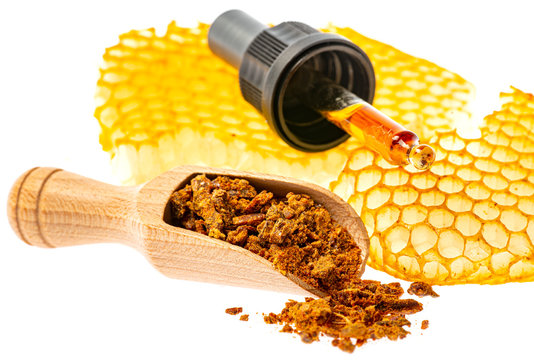
Propolis is a natural substance made by honeybees from plant resins, waxes and other materials. Bees use it to seal and protect their hives.
For centuries, propolis has been used as a traditional remedy for problems involving the mouth, throat, skin and respiratory tract.
Today, propolis is available as:
- Capsules
- Tablets
- Liquid extracts
- Sprays
- Lozenges
- Tinctures
- Mouthwashes
- Toothpastes
- Topical preparations
Laboratory studies have demonstrated antimicrobial, antioxidant and anti-inflammatory activity. However, laboratory activity does not automatically mean that a supplement will treat an infection or disease in humans.
Human research is encouraging in some areas, particularly oral health, but the evidence is still uneven and propolis products vary considerably in composition.
What Is Propolis?
Propolis is sometimes called “bee glue.”
Bees collect resins from plants and combine them with beeswax and their own secretions to produce a sticky material used inside the hive.
Its chemical composition varies depending on:
- Plant sources
- Geographic location
- Season
- Extraction method
- Type of propolis
This is important because one propolis extract may not be equivalent to another.
Brazilian green propolis, Brazilian red propolis, European poplar-type propolis and other preparations can have quite different chemical profiles.
What Are the Potential Benefits of Propolis?
Research has investigated propolis for several areas.
1. Immune Support
Propolis contains numerous biologically active compounds, particularly polyphenols and flavonoids.
Laboratory research suggests that propolis may influence:
- Inflammatory pathways
- Oxidative stress
- Immune-cell activity
- Microbial growth
Human evidence is less definitive.
A recent systematic review and meta-analysis of 18 randomized trials involving 498 adults found that oral propolis was associated with reductions in some inflammatory markers, including hs-CRP, IL-6 and TNF-α, and increases in several antioxidant markers. However, the researchers emphasized substantial variation between studies and low certainty for several outcomes.
What does this mean?
Propolis may have immune-modulating and antioxidant effects, but it should be considered a supportive supplement rather than a treatment for an infection or immune disorder.
Propolis as Part of an Immune-Support Combination
Propolis is often used as part of a broader seasonal immune-support routine, rather than on its own.
Common combinations include:
- Propolis + Echinacea
- Propolis + vitamin C
- Propolis + zinc
- Propolis + vitamin C + zinc
- Propolis + Echinacea + vitamin C
- Propolis combined with other nutrients such as vitamin D or NAC
The rationale is that these ingredients have different biological roles. Propolis and Echinacea contain bioactive plant compounds, while nutrients such as zinc and vitamin C are essential for normal immune function.
However, evidence for one ingredient or combination should not automatically be applied to every commercial product.
What Does the Research Show?
There is particularly interesting evidence for a combination of Echinacea, propolis and vitamin C.
A randomized, double-blind, placebo-controlled study involving 430 children aged 1–5 years evaluated a preparation containing Echinacea, propolis and vitamin C during a 12-week winter period.
The researchers reported fewer respiratory illness episodes, fewer days with fever and fewer total illness days in the treatment group compared with placebo.
This is encouraging, but it was one particular formulation, and it does not prove that every combination of propolis, Echinacea and vitamin C will produce the same results.
More recent reviews continue to describe the evidence for Echinacea and other herbal combinations as promising but heterogeneous, with outcomes depending on the specific preparation, dose and population studied.
Bottom line: Some combination products have shown promising results, but more research is needed before these combinations can be considered proven methods of preventing respiratory infections or shortening influenza.
What About Zinc and Vitamin C?
Zinc and vitamin C are often combined with propolis or Echinacea in immune-support products.
Both nutrients are important for normal immune function.
Zinc
Some research suggests that certain zinc preparations, particularly when started early during a common cold, may modestly reduce the duration of symptoms.
However, results vary considerably depending on:
- The form of zinc
- The dose
- The timing
- How the zinc is administered
Higher doses are not necessarily better and may cause nausea, gastrointestinal discomfort or other adverse effects.
Long-term excessive zinc intake can also interfere with copper absorption.
Vitamin C
Vitamin C is essential for normal immune function and acts as an antioxidant.
Regular vitamin C intake is important for maintaining adequate levels, but taking large doses after an infection has already started does not reliably prevent or cure respiratory infections.
Therefore, vitamin C should be viewed as a nutrient supporting normal immune function, rather than a treatment for influenza.
Propolis + Zinc + Vitamin C
Many people use these nutrients together during the winter respiratory-infection season.
There is a reasonable biological rationale for combining ingredients with different mechanisms, but there is not enough clinical evidence to conclude that the specific combination of propolis, zinc and vitamin C is guaranteed to prevent infections or produce faster recovery.
2. Oral Health
This is one of the more interesting areas of human research.
Studies have investigated propolis mouthwashes, gels and toothpastes for:
- Dental plaque
- Gingivitis
- Periodontal disease
- Oral infections
- Recurrent mouth ulcers
A 2025 systematic review and meta-analysis found that propolis-containing mouthwashes were associated with significant reductions in plaque and gingival inflammation, although the researchers noted the need for further research.
Earlier systematic reviews also found promising results for plaque and gingival inflammation but highlighted limitations such as small studies and methodological differences.
Important
Propolis should not replace brushing with fluoride toothpaste, flossing, professional dental care or treatment of periodontal disease.
3. Recurrent Mouth Ulcers
Propolis has also been studied for recurrent aphthous stomatitis, commonly called canker sores.
A 2024 systematic review and meta-analysis included 10 randomized trials involving 825 participants. Some studies suggested that topical or oral propolis may reduce healing time, pain and redness.
However, the overall certainty of the evidence was very low, because of differences between products, small studies and risk of bias.
So propolis may be worth investigating as a supportive option, but the evidence is not strong enough to consider it an established treatment.
4. Respiratory and Throat Support
Propolis has attracted considerable interest for respiratory health because laboratory studies have demonstrated antimicrobial and anti-inflammatory activity.
Research has investigated propolis for:
- Sore throat
- Upper respiratory infections
- Cough
- Respiratory inflammation
A systematic scoping review found substantial experimental and clinical research in this area, but the evidence varies considerably according to the condition and formulation studied.
The important distinction
Propolis may potentially support recovery or provide symptomatic support, but it should not be presented as a substitute for appropriate medical treatment of bacterial infections, pneumonia, severe respiratory illness or other serious conditions.
5. Antioxidant and Anti-Inflammatory Effects
Propolis contains numerous polyphenolic compounds, including flavonoids.
These compounds may contribute to its:
- Antioxidant activity
- Anti-inflammatory activity
- Antimicrobial activity
Recent human research suggests that oral propolis may influence inflammatory and antioxidant biomarkers, but the clinical significance of these changes remains uncertain.
This is an area where promising biochemical findings should not be confused with proven treatment of chronic disease.
What About NAC?
N-acetylcysteine (NAC) is another supplement sometimes included in respiratory-health routines.
NAC is a precursor of glutathione, one of the body’s important antioxidant compounds. It also has mucolytic properties, meaning that it can help make mucus less thick and easier to clear.
For this reason, NAC has been studied in various respiratory conditions.
However, evidence that NAC prevents ordinary viral respiratory infections or consistently shortens influenza is not strong enough to make that claim.
NAC therefore makes more sense as a separate respiratory-support supplement with a different mechanism, rather than as a proven synergistic partner with propolis.
6. Propolis for Cold Sores and Herpes?
This is particularly relevant to your Cold Sores/Shingles article.
Propolis has demonstrated antiviral activity in laboratory research, and some clinical research has investigated topical propolis preparations for herpes-related lesions.
However, the evidence is not strong enough to say that oral propolis prevents herpes outbreaks or replaces antiviral medication.
Therefore, a reasonable way to present it is:
Propolis may be considered a supportive option, but it should not replace proven antiviral treatment for recurrent herpes infections.
For frequent or severe cold sores, evidence-based antiviral treatment remains the mainstay.
Can Propolis Be Used on Acne or Skin Problems?
Propolis has antimicrobial and anti-inflammatory properties and is sometimes used topically in creams, gels, tinctures and other preparations.
Some clinical research has investigated propolis-containing formulations for acne and found promising improvements.
However, an important limitation is that some studies used propolis together with other ingredients, such as tea tree oil and Aloe vera. Therefore, it is difficult to determine how much of the benefit came specifically from propolis.
In practice, propolis preparations are sometimes used topically on minor pimples, superficial skin irritation and other small localized skin problems.
What About Boils or Abscesses?
This is different.
A boil or abscess is a collection of pus, and some abscesses require professional assessment and drainage.
Propolis tincture should not be presented as a substitute for treatment of an abscess or a significant bacterial skin infection.
Seek medical advice if a lesion is:
- Large
- Very painful
- Rapidly increasing in size
- Surrounded by spreading redness
- Producing significant pus
- Associated with fever
- Located near the eye or nose
Propolis may have antimicrobial activity, but this does not mean that applying it to an abscess will eliminate the infection.
Propolis Dosage
There is no universally established dosage for propolis.
This is because products differ substantially in:
- Concentration
- Extraction method
- Standardization
- Chemical composition
- Route of administration
Clinical studies have used very different doses and formulations. In a 2026 systematic review, oral studies used approximately 250–1500 mg/day, but this should not be interpreted as a universal recommended dose.
Practical advice
Follow the manufacturer’s dosage unless your healthcare professional recommends otherwise.
For propolis:
More is not necessarily better.
Propolis Extract vs Raw Propolis
Commercial products may contain:
- Raw propolis
- Powdered propolis
- Alcohol extracts
- Water extracts
- Standardized extracts
- Concentrated formulations
The amount of active compounds can therefore differ dramatically between products.
When comparing supplements, look for:
- Amount of extract per serving
- Standardization information, if available
- Source of propolis
- Extraction method
- Third-party quality testing
Propolis Side Effects
Propolis is generally tolerated by many people, but it can cause adverse reactions.
Possible side effects include:
- Skin irritation
- Contact dermatitis
- Mouth irritation
- Burning sensation
- Nausea
- Gastrointestinal discomfort
- Allergic reactions
The most important safety issue is allergy.
Can Propolis Cause Skin Reactions?
Yes.
Although propolis is a natural product, it can cause contact dermatitis, particularly when applied directly to the skin or mouth.
Possible reactions include:
- Redness
- Itching
- Burning
- Swelling
- Rash
- Blistering
People who develop irritation after applying a propolis tincture or cream should stop using it.
This is particularly important with concentrated products because “natural” does not mean non-allergenic.
Who Should Avoid Propolis?
People with known allergies to bee products or certain plant resins should be particularly cautious.
NCCIH specifically notes that people with pollen allergies may react to bee products including propolis.
Stop using propolis and seek medical attention if you develop:
- Swelling of the lips or tongue
- Difficulty breathing
- Widespread hives
- Severe dizziness
- Other signs of a serious allergic reaction
Propolis and Pregnancy
There is not enough reliable evidence to establish the safety of oral propolis supplementation during pregnancy or breastfeeding.
Therefore, pregnant or breastfeeding women should discuss propolis with their healthcare professional before using concentrated supplements.
Propolis for Children
Children may encounter propolis in:
- Throat sprays
- Lozenges
- Toothpaste
- Syrups
- Supplements
However, safety depends on the child’s age, product and formulation.
Do not automatically use an adult propolis supplement in a child.
For children with recurrent infections, persistent sore throats or other symptoms, the underlying cause should be assessed rather than relying on propolis as an immune booster.
Propolis Combinations for Children
Some children’s supplements combine propolis with several other ingredients rather than providing propolis alone.
One example is PEDIAKID Immunité Gummies, which contains propolis and Echinacea together with royal jelly, vitamin C, vitamins B6 and B12 and copper. The manufacturer’s current instructions state that the product is intended for children aged 3 years and older.
Combination products can be convenient for parents who prefer an all-in-one supplement rather than giving several separate products.
However, parents should always check:
- The child’s age
- The exact formulation
- The recommended dose
- Possible allergies
- Other supplements the child is taking
- Prescription or non-prescription medicines
Does Propolis Interact With Medications?
Evidence about specific drug interactions is limited.
Because propolis has biological effects and commercial preparations vary, people taking regular medication should check with a pharmacist or doctor before using concentrated propolis supplements.
Particular caution is reasonable with:
- Anticoagulants or antiplatelet medicines
- Medicines affecting blood clotting
- Multiple prescription medicines
- Before surgery
If you take medication regularly, don’t assume that “natural” means interaction-free.
Propolis vs Echinacea
Both are commonly marketed for immune support, but they are different natural products.
| Feature | Propolis | Echinacea |
|---|---|---|
| Source | Bee product | Plant |
| Main compounds | Polyphenols, flavonoids and other compounds | Alkamides, caffeic acid derivatives and polysaccharides |
| Oral-health research | Promising | Limited |
| Immune research | Promising but heterogeneous | Mixed |
| Respiratory research | Promising but inconsistent | Extensively studied |
| Allergy concern | Important with bee/pollen allergies | Important with some plant allergies |
| Standardized products | Variable | Variable |
Neither should be considered a guaranteed way to prevent infections.
Can You Take Propolis and Echinacea Together?
There is no established evidence that the combination is more effective than either product alone.
Because both can cause allergic reactions, combining them may also make it more difficult to identify which product caused a reaction.
If you want to use both, discuss the combination with your pharmacist or healthcare professional—particularly if you take prescription medicines or have allergies.
💊 Pharmacist’s Tip
Propolis is one of those supplements where the formulation matters.
A propolis mouthwash is not equivalent to an oral capsule, and a concentrated tincture is not equivalent to a children’s gummy containing a small amount of propolis together with other nutrients.
In pharmacy practice, combinations containing propolis, Echinacea, vitamin C and zinc are commonly used by people during the winter respiratory-infection season. Some people report that these combinations seem to help them experience milder symptoms or recover more quickly.
Bottom Line
Propolis is an interesting bee-derived supplement with antimicrobial, antioxidant and anti-inflammatory properties.
The most encouraging human evidence currently concerns oral health, while research into immune, respiratory and inflammatory effects is promising but less conclusive.
Some combination preparations containing propolis, Echinacea and vitamin C have produced encouraging results in clinical research, including a study in young children during the winter respiratory-infection season. However, these findings cannot automatically be applied to every propolis combination or commercial supplement.
Zinc, vitamin C and NAC are also commonly used as part of seasonal respiratory-support routines, but evidence for the specific combination of all these ingredients is insufficient to claim that it prevents influenza or guarantees faster recovery.
Propolis may also have useful topical applications, including research into acne, but it should not be used as a substitute for medical treatment of abscesses or significant skin infections.
Overall, propolis is best viewed as a potential supportive supplement, with benefits that depend on the preparation, dose, purpose and individual circumstances.
Is propolis an antibiotic?
No. Propolis contains compounds with antimicrobial activity, but it is not a substitute for prescription antibiotics when bacterial infection requires antibiotic treatment.
Does propolis boost the immune system?
Propolis may influence immune and inflammatory pathways, but evidence that it broadly “boosts immunity” and prevents infections is not strong enough to make that claim.
Can propolis help with sore throat?
Some research suggests potential benefits in respiratory and throat-related conditions, but evidence varies by product and condition. It should be considered supportive rather than a replacement for medical treatment.
Can propolis help cold sores?
There is promising research, particularly with topical preparations, but evidence remains insufficient to recommend propolis as a replacement for established antiviral treatment.
Is propolis good for gums?
This is one of the more promising uses. Clinical studies of propolis-containing mouthwashes and other oral products suggest potential benefits for plaque and gingival inflammation.
Can I take propolis every day?
There is no universally established long-term dosage. Follow the product instructions and discuss prolonged use with a healthcare professional, particularly if you take medication.
Can propolis cause allergies?
Yes. People allergic to bee products or certain pollens may be at increased risk of reacting to propolis.
Can propolis help me recover faster from a cold or flu?
Some studies of specific propolis-containing combinations have reported encouraging results, but the evidence is not strong enough to conclude that propolis alone reliably shortens influenza or other viral infections.
It should be considered supportive rather than a replacement for appropriate medical care.
Can I take propolis, Echinacea, zinc and vitamin C together?
These ingredients are commonly combined in immune-support products and there is a biological rationale for using nutrients and plant-derived compounds with different functions together. However, there is not enough clinical evidence to say that the combination is guaranteed to prevent infections or shorten influenza.
If you take several supplements, check the total amount of zinc, vitamin C and other nutrients you are receiving to avoid unnecessarily high doses.
Is propolis good for pimples?
Propolis has antimicrobial and anti-inflammatory properties, and some propolis-containing topical formulations have shown promising results in acne research. However, evidence remains limited and products used in studies often contained additional active ingredients.
Can I put propolis tincture on an abscess?
It is not recommended to rely on propolis tincture to treat an abscess. An abscess may require professional assessment and drainage, particularly when it is large, painful, spreading or associated with fever.
Is propolis safe for children?
Safety depends on the child’s age, formulation and dose. Some children’s products containing propolis are specifically formulated for young children, while concentrated adult products may not be appropriate.
Always follow the manufacturer’s age and dosage instructions and check for allergies.
References
- Choi K, Kim JY. Anti-inflammatory and antioxidant effects of propolis: A systematic review and meta-analysis. Complementary Therapies in Medicine. 2026.
- Sycińska-Dziarnowska M, et al. Propolis as a Natural Remedy in Reducing Dental Plaque and Gingival Inflammation: A Systematic Review and Meta-Analysis. Journal of Functional Biomaterials. 2025.
- Roberts T, Kallon II, Schoonees A. Efficacy and Safety of Propolis for Treating Recurrent Aphthous Stomatitis: A Systematic Review and Meta-Analysis. Dentistry Journal. 2024.
- Halboub E, et al. Efficacy of propolis-based mouthwashes on dental plaque and gingival inflammation: a systematic review. BMC Oral Health. 2020.
- Hwu YJ, Lin FY. Effectiveness of propolis on oral health: a meta-analysis. Journal of Nursing Research. 2014.
- Zulhendri F, et al. The use of propolis in dentistry, oral health, and medicine: A review. 2021.
- National Center for Complementary and Integrative Health (NCCIH). Seasonal Allergies at a Glance. Information regarding allergic reactions to bee products including propolis.
8. Cohen HA, et al. Efficacy and safety of an herbal preparation containing Echinacea, propolis, and vitamin C in preventing respiratory tract infections in children. Archives of Pediatrics & Adolescent Medicine. 2004. PubMed
9. Singh M, Das RR. Zinc for the common cold. Cochrane Database of Systematic Reviews. PubMed
10. Morais JF, et al. Propolis and acne: clinical evidence for a propolis-containing topical formulation. PubMed
11. Recent systematic review of propolis and inflammatory/oxidative biomarkers. 2026. PubMed
12. Systematic review of propolis for recurrent aphthous stomatitis. 2024. PubMed
13. American Academy of Dermatology. Acne: Diagnosis and treatment.
14. National Center for Complementary and Integrative Health (NCCIH). Information on allergies and bee products.
Related guides;
- Echinacea: Benefits, Uses, Dosage & Safety
- Why Do I Keep Getting Cold Sores or Shingles?
- Supplements for Immune Support
- Probiotics
- Zinc
- Vitamin C
- Why Do I Keep Getting Pimples?
- Best Immune Supplements for Children (2026): Safe & Evidence-Based Guide
- Vitamin D and the Immune System
- CHILDREN VS ADULTS: WHY SUPPLEMENTS, DOSAGES & EFFECTS CAN BE DIFFERENT
- 🧴 Skin Health