
Vitamin B12 Benefits: Energy, Brain Function & Health Explained
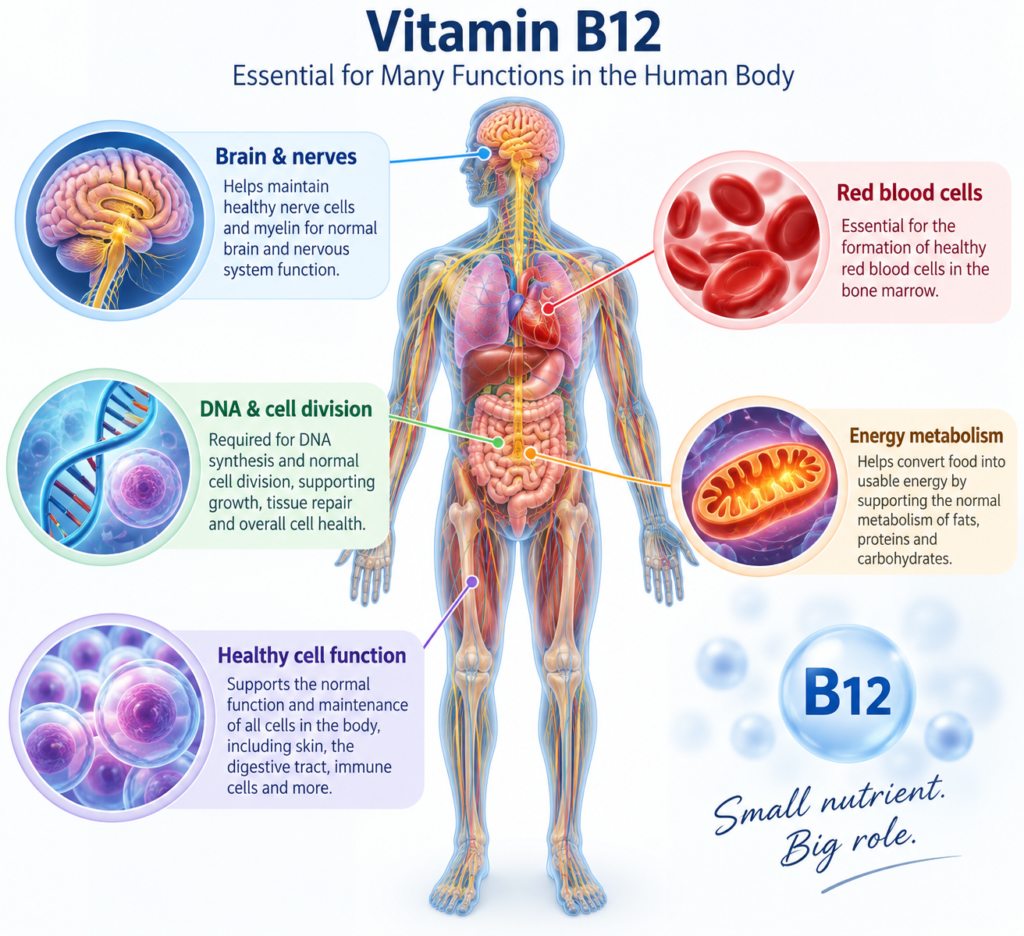
Vitamin B12 is essential for maintaining energy levels, brain function, and overall health. It plays a critical role in red blood cell production and neurological function.
This guide explains the key benefits of vitamin B12 and why it is important for preventing fatigue and deficiency.
🔹 Supports Energy Production
Vitamin B12 helps convert food into energy and supports metabolic function.
Low levels can lead to fatigue and weakness.
Best Supplements for Fatigue (2026): Top Vitamins & Minerals for Energy
🔹 Supports Brain Function
Vitamin B12 plays a key role in:
- Memory
- Focus
- Cognitive performance
Low levels are linked to brain fog and reduced mental clarity.
Why Do I Have Brain Fog? (Causes and Nutritional Factors)

🔹 Helps Prevent Anemia
Vitamin B12 supports red blood cell production.
Deficiency can lead to anemia and fatigue.
🔹 Supports Nervous System Health
Vitamin B12 helps maintain nerve function and neurological health.
Deficiency may cause tingling or numbness.
🔹 Reduces Fatigue
Vitamin B12 is commonly associated with improved energy levels.
Vitamins for Low Energy in Women: What to Take for Fatigue & Weakness
Which Nutrients Work Together With Vitamin B12?
Vitamin B12 does not work in isolation. It participates in several metabolic pathways alongside other vitamins and minerals. Folate (vitamin B9) is particularly closely linked to B12 because both are involved in one-carbon metabolism, DNA synthesis, and the conversion of homocysteine to methionine. Vitamin B6 also participates in homocysteine metabolism, while iron is essential for hemoglobin production and therefore works alongside B12 in maintaining healthy blood formation. Other nutrients, including riboflavin (vitamin B2), zinc and magnesium, contribute to enzymes and cellular processes that support normal metabolism, but they should not be described as “activating” B12 itself.
Can another nutrient interfere with vitamin B12?
The most important point is that folate and B12 should not be thought of as competing nutrients. They work closely together, but taking large amounts of folic acid can correct the anemia associated with B12 deficiency without correcting the underlying neurological damage. For this reason, unexplained anemia should not simply be treated with folic acid without considering possible B12 deficiency.
More commonly, factors that interfere with B12 are medications or problems with absorption rather than other vitamins or minerals. Long-term use of acid-suppressing medicines such as proton-pump inhibitors and H2-receptor antagonists can reduce absorption of food-bound B12, while metformin can lower B12 absorption and blood concentrations. Conditions affecting the stomach or small intestine can also impair B12 absorption.
Important: Vitamin B12 Is Not an “Energy Booster” Unless You Are Deficient
Vitamin B12 is involved in normal energy metabolism, but taking extra B12 does not necessarily provide more energy in people who already have adequate B12 levels. The noticeable improvement in fatigue and weakness associated with B12 supplementation is most relevant when B12 deficiency is contributing to the problem. B12 supplements should therefore not be presented as a general stimulant or treatment for unexplained fatigue without considering other possible causes.
Evidence summary:
Strong evidence supports vitamin B12 in red blood cell formation and neurological function. Supplementation is highly effective in deficiency states but has limited benefit in individuals with adequate levels.
Vitamin B12 Benefits in Children
Vitamin B12 is especially important during childhood because the body is growing rapidly and the nervous system is still developing. B12 is required for normal DNA synthesis, red blood cell formation, and maintenance of healthy nerve cells and myelin. Severe B12 deficiency in infants and young children can cause anemia, poor growth, weakness, developmental delay, and neurological problems; some neurological effects can become persistent if deficiency is not recognized and treated promptly.
However, this does not mean that every child needs a B12 supplement. A 2026 Cochrane review found that B12 supplementation in children clearly reduces B12 deficiency and increases B12 levels, but evidence that supplementation improves growth or cognitive development in children who are not deficient is limited. Children who follow a vegan diet, have restricted diets, have gastrointestinal conditions affecting absorption, or whose mothers had B12 deficiency during pregnancy or breastfeeding may have a higher risk and should have their nutritional needs assessed by a pediatrician or other qualified healthcare professional.
Related guides:
- Vitamin B12 Deficiency Symptoms (Complete Guide)
- Vitamin B12 Dosage: How Much Should You Take Daily? (Safe Guide)
- Best Vitamin B12 Supplements (2026): Top Picks for Energy & Absorption
References
- National Institutes of Health, Office of Dietary Supplements. Vitamin B12 — Health Professional Fact Sheet. NIH Office of Dietary Supplements – Vitamin B12
- Larvie DY, et al. Vitamin B12 supplementation for growth, development, and cognition in children. Cochrane Database of Systematic Reviews. 2026. PubMed – Vitamin B12 supplementation in children
- Dror DK, Allen LH. Effect of vitamin B12 deficiency on neurodevelopment in infants: current knowledge and possible mechanisms. Nutrition Reviews. 2008;66(5):250–255. PubMed – B12 deficiency and infant neurodevelopment
- NIH Office of Dietary Supplements. Folate — Health Professional Fact Sheet. NIH Office of Dietary Supplements – Folate
- NIH Office of Dietary Supplements. Vitamin B6 — Health Professional Fact Sheet. NIH Office of Dietary Supplements – Vitamin B6
- Kanvinde S, Khurana A, Mudaliar S. Diagnosis and treatment of vitamin B12 deficiency in children. 2026. PubMed – Diagnosis and treatment of B12 deficiency in children
Medical Disclaimer
Disclaimer: This article is intended for general educational and informational purposes only and does not replace medical advice, diagnosis, or treatment from a qualified healthcare professional. Vitamin B12 supplementation may be appropriate for people with confirmed or suspected deficiency, but the appropriate dose and form depend on the cause of the deficiency, age, diet, medications, and ability to absorb B12. Children, pregnant or breastfeeding women, and people with chronic medical conditions or long-term medication use should consult a healthcare professional before starting supplements. If a child has developmental problems, unusual weakness, anemia, numbness, difficulty walking, or other concerning symptoms, medical evaluation should not be delayed.