Magnesium and Blood Pressure: Can It Help Lower Hypertension?
High blood pressure (hypertension) affects millions of adults worldwide and significantly increases the risk of heart disease and stroke.
Magnesium is an essential mineral involved in vascular function, muscle contraction, and electrolyte balance. But can magnesium supplementation actually help lower blood pressure?
Let’s examine what the research says.
Why Magnesium Matters for Blood Pressure
Magnesium plays several roles that directly influence blood pressure regulation:
1. Helps Relax Blood Vessels
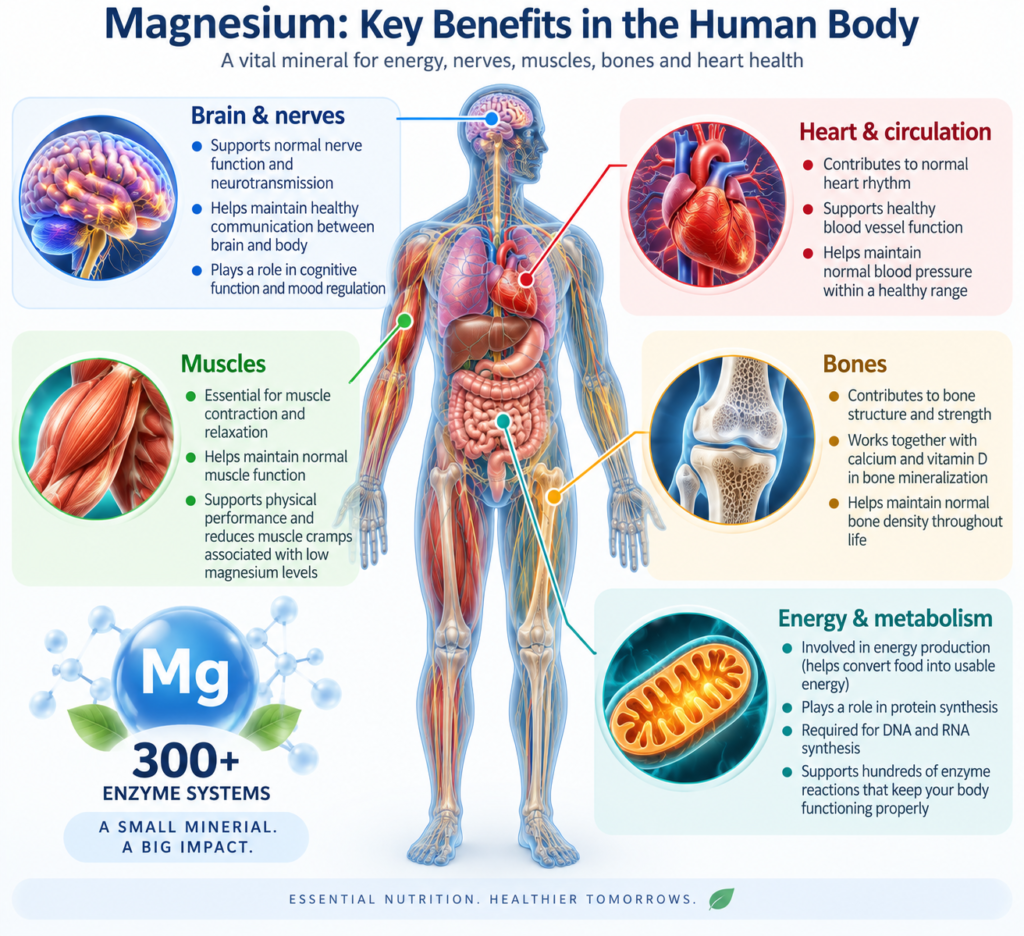
Magnesium acts as a natural calcium channel blocker.
It helps relax the smooth muscles in blood vessel walls, allowing arteries to dilate. This can reduce vascular resistance and lower blood pressure.
2. Supports Sodium and Potassium Balance
Blood pressure is influenced by the balance of sodium, potassium, and magnesium.
Low magnesium levels may disrupt this balance and contribute to increased vascular tension.
3. Reduces Vascular Inflammation
Magnesium deficiency has been associated with:
- Increased inflammation
- Endothelial dysfunction
- Higher cardiovascular risk
Adequate magnesium intake supports healthy blood vessel function.
What Does the Research Say?
Multiple studies suggest magnesium supplementation may produce modest reductions in blood pressure.
Meta-analyses have shown:
- Small but statistically significant reductions in systolic blood pressure
- Slight reductions in diastolic blood pressure
- Greater effects in people with existing hypertension
However, magnesium is not a replacement for prescribed blood pressure medication. It may serve as supportive therapy alongside lifestyle improvements.
How Much Magnesium for Blood Pressure?
The Recommended Dietary Allowance (RDA):
- Men: 400–420 mg per day
- Women: 310–320 mg per day
In clinical research, supplemental doses typically range from:
200–400 mg per day
The tolerable upper intake level from supplements alone is approximately 350 mg daily unless supervised by a healthcare professional.
For a detailed breakdown, see our guide on magnesium dosage.
Best Forms of Magnesium for Blood Pressure
Absorption matters.
Commonly used forms include:
Magnesium Citrate
- Good absorption
- Often used in clinical studies
Magnesium Glycinate
- Highly absorbable
- Gentler on digestion
Magnesium Taurate
- Taurine may support cardiovascular function
- Often discussed in heart health contexts
Magnesium oxide is less bioavailable and may cause digestive discomfort.
For a full comparison, see our article on types of magnesium and Best Magnesium Supplements.
Who May Benefit Most?
Magnesium supplementation may be especially helpful for:
- Individuals with low dietary intake
- People with insulin resistance
- Those under chronic stress
- Individuals with mild hypertension
People with kidney disease should consult a healthcare provider before supplementing.
Food Sources of Magnesium
Before turning to supplements, increasing magnesium-rich foods may help:
- Pumpkin seeds
- Almonds
- Spinach
- Black beans
- Avocado
- Dark chocolate
Dietary magnesium works synergistically with potassium and fiber to support cardiovascular health.
Magnesium as Part of a Blood Pressure Strategy
Magnesium alone is unlikely to dramatically lower high blood pressure. It works best when combined with:
- Reduced sodium intake
- Increased potassium intake
- Regular physical activity
- Weight management
- Adequate sleep
Lifestyle changes remain the foundation of blood pressure control.
Final Thoughts
Magnesium plays a meaningful role in vascular health and may contribute to modest reductions in blood pressure, particularly in individuals with low intake or existing hypertension.
While it should not replace medical treatment, optimizing magnesium intake is a low-risk strategy that supports overall cardiovascular health.
For broader information about magnesium’s functions and benefits, read our complete guide to magnesium.
Related guides:
- Magnesium
- Magnesium Benefits
- Magnesium Dosage: How Much Should You Take Daily?
- Magnesium Side Effects
- Best Magnesium Supplements
- Supplements That Interfere with Blood Pressure Medications and Beta Blockers
- Best Supplements for Blood Sugar Control: What Actually Works?
- Why You Feel Tired After Eating (Blood Sugar Explained)