
Joint Pain: Causes, Symptoms, Treatment & Supplements That May Help
Joint pain is extremely common, but joint pain is a symptom, not a diagnosis.
Pain in the knees, hips, hands, shoulders, ankles, feet, neck or other joints can have many different causes.
Sometimes it is related to overuse or a previous injury. Sometimes it is caused by osteoarthritis. In other cases, inflammation, autoimmune disease, gout, infection or another medical condition may be responsible.
This distinction matters because the best treatment depends on the cause.
Supplements may provide supportive options for some people, but they should not be used to delay diagnosis or replace appropriate treatment.
What Is a Joint?
A joint is the place where two or more bones meet. Joints hold the skeleton together while allowing the body to move, bend and rotate. They are found throughout the body — in the knees, hips, shoulders, elbows, wrists, fingers, ankles, toes, spine and jaw, among other locations.
A joint is not simply “two bones touching.” Most movable joints contain several structures working together:
- Cartilage — a smooth, firm tissue that covers the ends of bones and helps them move against each other with less friction.
- Synovial membrane — a thin lining that produces synovial fluid.
- Synovial fluid — a slippery liquid that helps lubricate the joint and reduce friction.
- Ligaments — strong bands of tissue that connect bone to bone and help stabilize the joint.
- Tendons — connect muscles to bones and help produce movement.
- Muscles — provide the force needed to move and support the joint.
- Bones — provide the rigid framework of the joint.


5
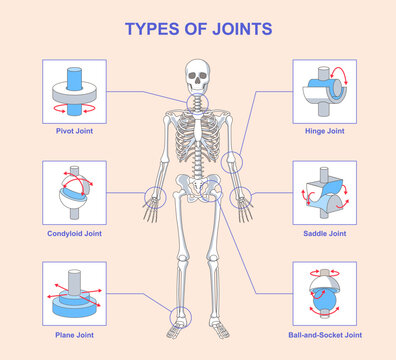
Are all joints the same?
No. The body contains different types of joints, depending on how much movement they allow.
Fibrous joints are held together by strong connective tissue and allow little or no movement. The joints between the bones of the skull are examples.
Cartilaginous joints are connected by cartilage and allow limited movement. The joints between some of the vertebrae are examples.
Synovial joints are the most freely movable joints and are the type most commonly associated with arthritis and everyday joint pain. They include the knees, hips, shoulders, elbows, wrists, fingers and ankles.
Which joints are affected most often?
There is no single joint that always becomes painful first. It depends on the condition.
However, the knees, hips and hands are among the joints commonly affected by osteoarthritis, while the spine can also be affected. Previous injuries, repetitive stress, body weight, age and genetics can influence which joints develop problems. (NIAMS)
For inflammatory arthritis such as rheumatoid arthritis, the hands, wrists and feet are commonly affected, and symptoms may occur in several joints at the same time.
In simple terms: joints are the body’s moving connections between bones. They need healthy cartilage, fluid, ligaments, tendons and muscles to move smoothly and remain stable. When one or more of these structures becomes damaged, inflamed or diseased, pain, stiffness, swelling and reduced movement can result.
What Is Joint Pain?
A joint is where two or more bones meet.
Healthy joints contain several structures that allow movement, including:
- Cartilage
- Bone
- Ligaments
- Tendons
- Muscles
- Synovium
- Joint fluid
Damage, inflammation or changes in any of these structures can produce pain or stiffness.
For example, osteoarthritis can affect cartilage as well as bone, synovium, tendons, ligaments and other joint structures.
What Does Joint Pain Feel Like?
Joint pain can feel very different depending on the cause.
You may experience:
- Aching
- Sharp pain
- Burning
- Stiffness
- Tenderness
- Swelling
- Warmth
- Reduced mobility
- A grinding or clicking sensation
- A feeling that the joint is unstable
- Pain after exercise or activity
- Pain after sitting or resting
- Pain at night
Where does joint pain occur most often?
| Location | Common possibilities |
|---|---|
| Knees | Osteoarthritis, injury, overuse, bursitis, tendon problems |
| Hips | Osteoarthritis, bursitis, tendon problems |
| Hands/fingers | Osteoarthritis, rheumatoid arthritis and other inflammatory conditions |
| Shoulders | Tendon problems, bursitis, arthritis, injury |
| Ankles/feet | Injury, arthritis, gout and overuse |
| Neck | Degenerative changes, muscle problems, injury |
| Lower back | Musculoskeletal problems, arthritis and spinal conditions |
This table is only a starting point. Similar symptoms can have very different causes.
The Most Common Causes of Joint Pain
1. Osteoarthritis
Osteoarthritis (OA) is the most common type of arthritis.
It develops as tissues within the joint change and break down over time.
It commonly affects:
- Knees
- Hips
- Hands
- Neck
- Lower back
Typical symptoms include:
- Pain during or after using the joint
- Stiffness after rest
- Swelling
- Reduced movement
- Joint instability
- Changes in joint shape
Morning or post-rest stiffness in osteoarthritis is often relatively short, commonly less than 30 minutes.
Important:
Osteoarthritis is not simply “wear and tear.”
Joint tissues undergo biological changes involving cartilage, bone and other structures.
2. Rheumatoid Arthritis
Rheumatoid arthritis (RA) is very different from osteoarthritis.
It is an autoimmune disease in which the immune system attacks healthy joint tissues.
It can cause:
- Joint pain
- Swelling
- Warmth
- Tenderness
- Significant morning stiffness
- Fatigue
- Reduced function
Morning stiffness that lasts more than 30 minutes is more suggestive of inflammatory arthritis than typical osteoarthritis.
Why this matters
Rheumatoid arthritis requires proper medical diagnosis and treatment.
A joint supplement should never be considered a substitute for treatment of rheumatoid arthritis.
3. Previous Injuries
A previous injury can cause joint pain immediately or contribute to problems years later.
Examples include:
- Ligament injuries
- Meniscus injuries
- Fractures
- Cartilage injuries
- Repeated sports injuries
A joint that has previously been damaged may be more vulnerable to future problems.
4. Overuse and Repetitive Movement
Repeatedly performing the same movement can irritate:
- Tendons
- Muscles
- Bursae
- Joint structures
This can happen with:
- Sports
- Manual work
- Gardening
- Repetitive computer work
- Heavy lifting
- Certain hobbies
Rest and gradual return to activity may help, but persistent pain should not simply be ignored.
5. Gout
Gout is an inflammatory form of arthritis caused by urate crystal accumulation in joints.
A gout attack can develop suddenly and cause:
- Severe pain
- Swelling
- Redness
- Heat
- Extreme tenderness
The big toe is a classic location, but gout can affect other joints as well.
If a joint suddenly becomes extremely painful, red, hot and swollen, do not assume it is ordinary arthritis.
6. Other Types of Arthritis
There are many forms of arthritis besides osteoarthritis and rheumatoid arthritis.
These include:
- Psoriatic arthritis
- Reactive arthritis
- Ankylosing spondylitis
- Juvenile idiopathic arthritis
- Lupus-related arthritis
- Gout
Different forms have different causes and treatments.
7. Bursitis and Tendon Problems
Not every painful area around a joint is actually caused by the joint itself.
Inflammation or irritation of:
- Tendons
- Bursae
- Ligaments
- Muscles
can produce pain around the joint.
This is particularly common around the:
- Shoulder
- Hip
- Knee
- Elbow
8. Joint Pain After an Infection
Some people develop joint symptoms after an infection.
One example is reactive arthritis, which can occur after certain gastrointestinal, urinary or genital infections.
Symptoms may begin days or weeks after the original infection.
Persistent or severe joint inflammation following an infection deserves medical assessment.
9. Age-Related Changes
Joint problems become more common with age.
However:
Getting older does not mean that severe or persistent joint pain should simply be accepted.
Pain can have a treatable cause.
Risk Factors for Joint Problems
Your risk may be higher if you have:
- Increasing age
- Previous joint injury
- Repetitive joint stress
- Excess body weight
- Certain genetic factors
- Abnormal joint structure
- Inflammatory or autoimmune disease
For osteoarthritis specifically, age, previous joint injury, repetitive use, excess weight, joint structure and family history can all influence risk.
Joint Pain vs Arthritis: What’s the Difference?
This is an important distinction.
Joint pain
A symptom.
Arthritis
A group of conditions affecting joints.
Osteoarthritis
A specific joint disease involving progressive changes and breakdown of joint tissues.
Rheumatoid arthritis
An autoimmune inflammatory disease.
So:
Having joint pain does not automatically mean you have arthritis.
How Is the Cause of Joint Pain Diagnosed?
There is no single test that diagnoses every cause of joint pain.
A healthcare professional may consider:
- Your symptoms
- How long you have had them
- Which joints are affected
- Whether symptoms are symmetrical
- Previous injuries
- Family history
- Medications
- Other medical conditions
- Physical examination
Depending on the situation, testing may include:
- Blood tests
- X-rays
- MRI
- Ultrasound
- Joint-fluid analysis
For osteoarthritis, imaging and laboratory testing may also be used to rule out other causes when necessary.
When Is Joint Pain an Emergency?
Seek urgent medical attention if a joint becomes:
- Suddenly extremely painful
- Very swollen
- Red and hot
especially if you also have:
- Fever
- Chills
- Feeling severely unwell
A hot, swollen joint can sometimes indicate joint infection, which requires prompt treatment.
Seek urgent medical attention after an injury if:
- The joint looks deformed
- You cannot bear weight
- You cannot move it normally
- There is severe swelling
- You have numbness or loss of sensation
- The pain is severe or rapidly worsening
When Should You See a Doctor for Joint Pain?
Make an appointment if:
- Pain persists for several weeks
- Pain keeps returning
- Swelling does not resolve
- Morning stiffness is prolonged
- Multiple joints are affected
- Your joints are becoming less mobile
- Pain interferes with sleep
- Pain interferes with normal activities
- You have unexplained fatigue, fever or weight loss
- You have psoriasis or another autoimmune condition
- You have recurrent attacks of severe joint pain
Persistent joint pain deserves an explanation rather than simply being treated indefinitely with supplements or painkillers.
What Can Help Joint Pain?
Treatment depends on the cause.
For osteoarthritis and many other mechanical joint problems, management may include:
- Exercise
- Strength training
- Weight management where appropriate
- Physical therapy
- Activity modification
- Heat or cold
- Braces or orthotics
- Topical treatments
- Appropriate pain medication
- Injections in selected cases
- Surgery for severe structural disease
Exercise can reduce osteoarthritis pain and stiffness while improving flexibility and muscle strength. Weight loss can also reduce stress on weight-bearing joints in people who are overweight or obese.
Exercise: One of the Most Important Joint Treatments
People with joint pain sometimes stop moving because they are afraid that exercise will make the problem worse.
But complete inactivity can lead to:
- Muscle weakness
- Reduced mobility
- Less joint support
- More difficulty with everyday activities
For many people with osteoarthritis, appropriate exercise can improve:
- Pain
- Stiffness
- Strength
- Flexibility
- Function
Possible options include:
- Walking
- Swimming
- Water aerobics
- Cycling
- Resistance training
- Stretching
- Range-of-motion exercises
- Tai chi
Start gradually and choose activities appropriate for your condition.
Weight and Joint Health
Excess body weight can place additional mechanical stress on weight-bearing joints.
This is particularly important for:
- Knees
- Hips
- Feet
Weight management can therefore be an important part of joint-health management.
Even when weight loss is appropriate, the goal should be sustainable improvement in health and mobility, not crash dieting.
Can Supplements Help Joint Pain?
This is where supplements may have a role.
However:
A supplement that supports joint health is not the same thing as a treatment that repairs damaged cartilage or cures arthritis.
Evidence varies considerably between ingredients.
Some of the most commonly studied joint-support ingredients include:
- Glucosamine
- Chondroitin
- Collagen
- Undenatured type II collagen
- Hyaluronic acid
- Omega-3 fatty acids
- Curcumin
- Boswellia
- MSM
The evidence is not equally strong for all of them, and results can vary substantially between products and individuals.
Common Joint Supplements at a Glance
| Supplement | Why people use it | What the evidence suggests | Important consideration |
|---|---|---|---|
| Glucosamine | Joint/cartilage support | Evidence is mixed; some people report symptom improvement | Results vary by formulation |
| Chondroitin | Joint/cartilage support | Some evidence for symptom relief in osteoarthritis | Product quality and formulation matter |
| Collagen | Joint and connective-tissue support | Some studies suggest benefits for joint symptoms | Evidence depends on collagen type and preparation |
| Type II collagen | Cartilage/joint support | Studied particularly in osteoarthritis | Different from ordinary collagen peptides |
| Hyaluronic acid | Joint lubrication/support | Oral products have been studied; evidence varies | Oral supplements differ from medical injections |
| Omega-3 | Inflammation and general health | More established for general cardiometabolic health; joint evidence varies by condition | May interact with some medicines |
| Curcumin | Anti-inflammatory support | Some studies suggest symptom improvement in osteoarthritis | Absorption and formulations vary |
| Boswellia | Joint comfort | Some clinical studies suggest possible symptom benefits | Herbal-drug interactions possible |
| MSM | Joint comfort | Some evidence for symptom improvement | Evidence remains limited compared with established treatments |
Important:
“Evidence suggests possible benefit” does not mean “proven to repair cartilage.”
Glucosamine and Chondroitin
Glucosamine and chondroitin are among the most established supplements marketed for joint health.
They are commonly used for osteoarthritis, particularly knee osteoarthritis.
However, studies have produced mixed results.
Some people report:
- Less pain
- Better mobility
- Improved comfort
while others experience little or no benefit.
If you use them:
Give the product enough time to assess whether it is helping, and avoid assuming that increasing the dose will necessarily produce a better result.
People taking anticoagulants such as warfarin should discuss glucosamine/chondroitin with a healthcare professional before using them.
Collagen for Joint Health
Collagen is a major structural protein found in:
- Cartilage
- Tendons
- Ligaments
- Skin
- Bone
Collagen supplements are therefore widely marketed for joint support.
There are different types and preparations, including:
- Collagen peptides
- Hydrolyzed collagen
- Type II collagen
These should not be treated as identical products.
Some clinical studies suggest collagen supplementation may improve joint discomfort or function in certain people, but results vary.
Important:
Collagen is not a replacement for exercise, physical therapy or medical treatment of arthritis.
Hyaluronic Acid
Hyaluronic acid is naturally present in joint tissues and synovial fluid.
It contributes to:
- Lubrication
- Shock absorption
- Joint movement
Oral hyaluronic acid supplements are marketed for joint support.
However, it is important not to confuse:
oral hyaluronic acid supplements
with
hyaluronic acid injections into a joint.
They are different interventions.
Omega-3 Fatty Acids
Omega-3 fatty acids, particularly EPA and DHA, have anti-inflammatory effects and are important for general health.
They may be useful as part of an overall healthy dietary pattern.
However, evidence for omega-3 supplements specifically treating osteoarthritis pain is not as strong as the evidence for their established roles in other areas of health.
If you take anticoagulant or antiplatelet medication, discuss higher-dose omega-3 supplementation with your healthcare professional.
Curcumin and Turmeric
Curcumin is a compound found in turmeric.
It has been studied for its potential anti-inflammatory effects.
Some clinical studies suggest that certain curcumin preparations may improve pain and function in people with osteoarthritis.
But there is an important issue:
Curcumin products are not interchangeable.
Absorption can differ substantially between formulations.
Some products contain additional ingredients intended to increase absorption.
This can also change their interaction profile.
Boswellia
Boswellia is a botanical ingredient commonly found in joint-support formulas.
It has been studied for:
- Osteoarthritis symptoms
- Joint discomfort
- Inflammatory processes
Some studies suggest possible benefits, but more high-quality research is needed.
As with other herbal supplements, consider:
- Medication interactions
- Product quality
- Dose
- Long-term safety
What About Vitamin and Mineral Supplements?
Vitamins and minerals are essential for normal bone, muscle and connective-tissue function.
But taking more vitamins does not automatically improve joint pain.
Correcting a genuine deficiency is important.
Examples include nutrients involved in:
- Bone health
- Muscle function
- Connective-tissue metabolism
- Normal immune function
For detailed information, see our Nutrient Deficiencies guides rather than treating high-dose vitamins as universal joint treatments.
What Should You Look for in a Joint Supplement?
If you decide to try a joint supplement, look beyond the front of the bottle.
Check:
1. Active ingredients
What exactly is included?
2. Dose
How much of each ingredient do you actually receive?
3. Form
Glucosamine, collagen and other ingredients can come in different forms.
4. Combination
Does the product contain several complementary ingredients or simply many ingredients at very small doses?
5. Interactions
Could anything in the formula interact with your medications?
6. Quality
Choose products from manufacturers with appropriate quality-control practices.
Best Joint Supplements
If you are specifically looking for products rather than general information about joint pain, see our dedicated guide:
Best Joint Supplements
There we compare products containing ingredients such as:
- Glucosamine
- Chondroitin
- Collagen
- Hyaluronic acid
- MSM
- Curcumin
- Boswellia
- Other joint-support ingredients
The best product depends on your goal, ingredients, dose, formulation and medications.
Best Joint Support Supplements: What Is the Difference?
You may also see our:
Best Joint Support Supplements
This page focuses more specifically on multi-ingredient formulas and combination products.
The two pages serve different purposes:
Joint Pain article → health information
Best Joint Supplements → product/recommendation intent
Best Joint Support Supplements → combination-formula/product intent
This distinction allows you to find the right product without turning the medical information article into a sales page.
Can You Combine Joint Supplements?
Sometimes.
For example, a formula may combine:
- Glucosamine
- Chondroitin
- MSM
- Collagen
- Hyaluronic acid
But more ingredients do not automatically mean a better product.
Before combining supplements:
Check for:
- Duplicate ingredients
- Excessive doses
- Medication interactions
- Allergies
- Existing medical conditions
For example, taking a joint formula plus a separate glucosamine product may simply duplicate the same ingredient.
Joint Supplements: When to Be Careful
Speak with a healthcare professional before starting a joint supplement if you:
- Take warfarin or another anticoagulant
- Take antiplatelet medication
- Have kidney disease
- Have liver disease
- Have diabetes
- Are pregnant or breastfeeding
- Have a shellfish allergy and are considering glucosamine
- Are preparing for surgery
- Take multiple medications
And remember:
Natural does not automatically mean safe.
What Joint Supplements Cannot Do
Joint supplements should not be presented as a cure for arthritis.
They cannot reliably:
- Reverse advanced joint damage
- Replace physical therapy
- Replace appropriate arthritis medication
- Cure rheumatoid arthritis
- Treat a joint infection
- Treat a fracture
- Correct a torn ligament
- Replace surgery when surgery is medically necessary
Some supplements may help symptoms in selected people.
That is a very different claim from repairing or rebuilding a damaged joint.
A Practical Approach to Joint Pain
If you have ongoing joint pain, think about it in this order:
Step 1 — Find the likely cause
Is it:
- Injury?
- Overuse?
- Osteoarthritis?
- Inflammatory arthritis?
- Gout?
- Tendon/bursa problem?
- Something else?
Step 2 — Protect the joint
Temporarily reduce activities that clearly aggravate the pain.
Step 3 — Keep moving appropriately
Avoid unnecessary prolonged inactivity.
Step 4 — Strengthen the surrounding muscles
Strong muscles can help support joints and improve function.
Step 5 — Address weight if appropriate
Particularly for knee and hip problems.
Step 6 — Consider medication when appropriate
Discuss pain-relief options with a healthcare professional.
Step 7 — Consider supplements as an adjunct
Choose based on:
evidence + goal + formulation + dose + safety + interactions.
Joint Pain: When Not to Self-Treat
Do not rely on supplements alone if you have:
- Sudden severe joint pain
- A hot, red, swollen joint
- Fever with joint pain
- Severe pain after trauma
- Inability to bear weight
- Significant joint deformity
- Sudden loss of movement
- Progressive weakness
- Unexplained weight loss
- Multiple swollen joints
- Prolonged morning stiffness
- Severe night pain
- Symptoms that continue to worsen
These symptoms may indicate a condition that requires medical evaluation.
What is the most common cause of joint pain?
There are many causes. Osteoarthritis is the most common type of arthritis, but joint pain can also result from injuries, overuse, gout, inflammatory arthritis, tendon problems, bursitis and other conditions.
Is joint pain always arthritis?
No. Joint pain is a symptom and can have many causes.
What is the difference between osteoarthritis and rheumatoid arthritis?
Osteoarthritis involves changes and breakdown of joint tissues over time. Rheumatoid arthritis is an autoimmune inflammatory disease. Their treatments can therefore be very different.
Can supplements help joint pain?
Some supplements may provide modest symptom support for certain people, particularly in osteoarthritis, but evidence varies by ingredient and formulation.
What are the most popular joint supplements?
Commonly used ingredients include glucosamine, chondroitin, collagen, hyaluronic acid, MSM, curcumin, Boswellia and omega-3 fatty acids.
Can collagen rebuild cartilage?
There is not enough evidence to describe oral collagen as a guaranteed way to rebuild damaged cartilage. Some studies suggest it may improve joint symptoms or function.
Is glucosamine good for arthritis?
Glucosamine has been extensively studied, but clinical results are mixed. Some people report improvement while others do not.
Can I take glucosamine with blood thinners?
Discuss it with your healthcare professional, particularly if you take warfarin.
Is exercise bad for arthritis?
Appropriately selected exercise can actually reduce pain and stiffness and improve strength and function in many people with osteoarthritis.
Should I rest completely when my joints hurt?
Usually, prolonged complete inactivity is not the best long-term strategy. Appropriate movement and strengthening can be beneficial, although acute injuries may require temporary activity modification.
When should I see a doctor for joint pain?
See a healthcare professional if pain is persistent, worsening, recurrent, significantly limits activity or is accompanied by swelling, prolonged stiffness or other concerning symptoms.
Related Guides
Joint & Arthritis Guides
- Best Joint Supplements
- Best Joint Support Supplements
- Osteoarthritis: Symptoms, Causes, Treatment & Supplements
- Knee Pain: Causes, Treatment & What May Help
- Back Pain: Causes, Treatment & What May Help
- Sciatica: Symptoms, Causes, Treatment & What May Help
- Osteoporosis: Causes, Symptoms, Prevention & Treatment
- Best Supplements for Bone Health
Supplement Guides
- Glucosamine: Benefits, Uses, Dosage & Safety
- Collagen for Joint Health: Types, Benefits & Safety
- Hyaluronic Acid: Benefits, Uses & Joint Health
- Omega-3: Benefits, EPA/DHA, Dosage & Interactions
- Curcumin: Benefits, Uses, Absorption & Safety
- Supplement Side Effects, Dosage & Overdose
- Pharmacist’s Guide to Supplement–Drug Interactions
- Supplements That May Help With Medication Side Effects
Medical Disclaimer
Medical Disclaimer: This article is provided for general educational and informational purposes only and does not constitute medical advice, diagnosis or treatment.
Joint pain can have many causes, some of which require medical evaluation and treatment. Supplements should not be used to delay diagnosis or replace prescribed medication, physical therapy or other appropriate treatment.
If you have severe, sudden or worsening joint pain, a hot or swollen joint, fever, significant injury, inability to bear weight or other concerning symptoms, seek medical evaluation.
Before taking supplements, particularly if you take prescription medication, have a chronic medical condition, are pregnant or breastfeeding, or are preparing for surgery, consult an appropriate healthcare professional.
Affiliate Disclosure
Some products mentioned on Nutrient Science Lab may be available through affiliate links. If you purchase through an affiliate link, we may receive a commission at no additional cost to you.
Our editorial recommendations are based on ingredient composition, formulation, available evidence, safety and practical considerations. Affiliate relationships do not determine our editorial conclusions.
References
- National Institute of Arthritis and Musculoskeletal and Skin Diseases (NIAMS) — Osteoarthritis: Symptoms, Causes & Risk Factors.
- NIAMS — Osteoarthritis: Diagnosis, Treatment, and Steps to Take.
- NIAMS — Living With Arthritis: Health Information Basics for You and Your Family.
- NIAMS — Arthritis: Overview and Types.
- NIAMS — Rheumatoid Arthritis: Symptoms, Causes & Risk Factors.
- NIAMS — Reactive Arthritis: Symptoms, Causes & Risk Factors.
- NIAMS — Arthritis and Rheumatic Diseases.
Last reviewed: August 2026
Editorial note: Evidence for supplements varies substantially between ingredients, formulations and medical conditions. Where evidence is uncertain or mixed, this article deliberately uses cautious language such as “may help,” “has been studied” and “evidence varies” rather than presenting supplements as cures or replacements for medical treatment.