
Magnesium Benefits: What It Does for Your Body and Health
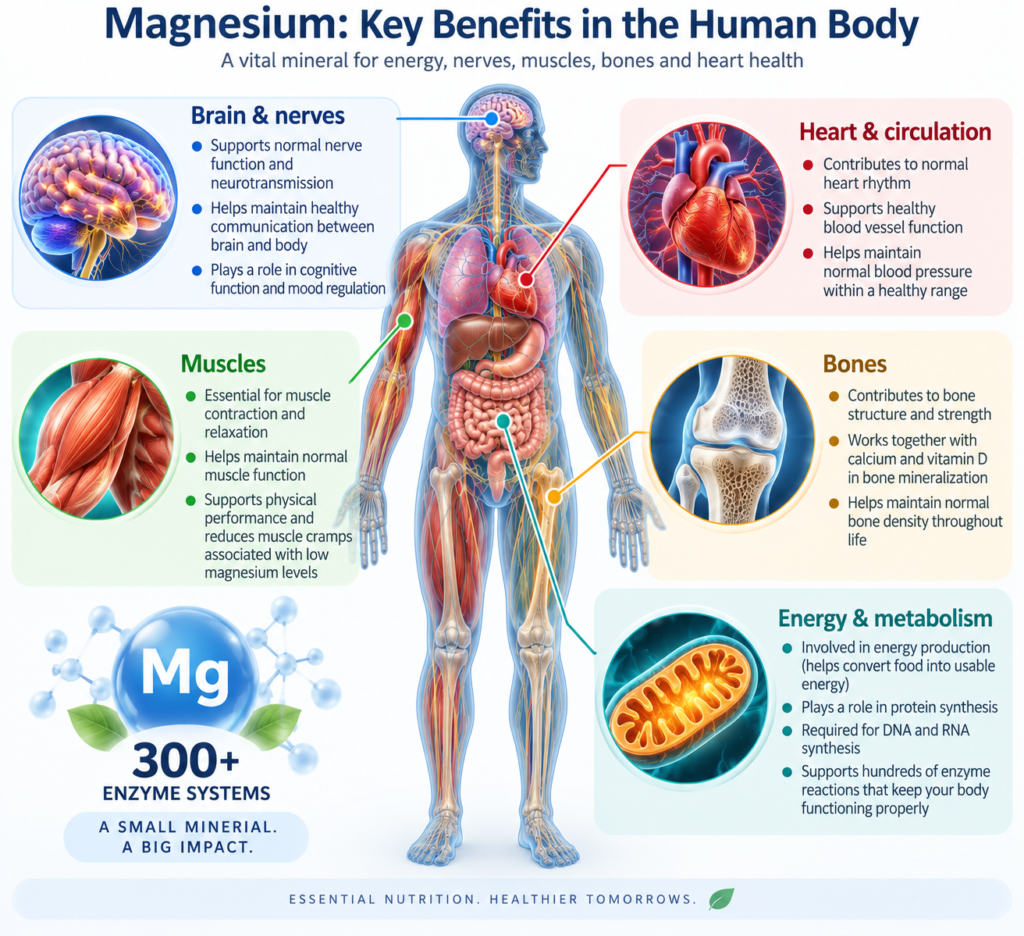
Magnesium is an essential mineral involved in more than 300 biochemical reactions in the body. It plays a critical role in muscle function, nerve signaling, energy production, heart health, and bone strength.
Despite its importance, many people do not get enough magnesium from their diet. Low magnesium levels may affect sleep, stress, and overall health.
Here are the most important science-supported benefits of magnesium.
What Does Magnesium Do in the Body?
Magnesium supports multiple systems in the body, including:
- Energy production (ATP synthesis)
- Nervous system regulation
- Muscle contraction and relaxation
- Blood pressure control
- Blood sugar balance
- Bone development
- Enzyme activity
Because of its wide role, adequate magnesium intake is essential for overall health.
For a complete overview, see our Magnesium guide.
1. Supports Better Sleep
Magnesium helps regulate neurotransmitters involved in relaxation and sleep.
It supports:
- GABA activity, which calms the nervous system
- Melatonin regulation
- Muscle relaxation
- Stress reduction
Some research suggests magnesium supplementation may improve sleep quality, especially in individuals with low magnesium levels.
Magnesium glycinate is often preferred for sleep support.
See our guide on Magnesium for sleep.
2. Reduces Stress and Anxiety
Magnesium plays a role in nervous system balance and stress response.
Low magnesium levels have been linked to:
- Increased anxiety symptoms
- Higher stress response
- Nervous system overactivity
Magnesium may help regulate the hypothalamic-pituitary-adrenal (HPA) axis, which controls stress hormones.
For more, see Magnesium and anxiety.
3. Supports Muscle Function and Prevents Cramps
Magnesium helps muscles contract and relax properly.
Benefits include:
- Reduced muscle tension
- Fewer muscle cramps
- Improved exercise recovery
- Better nerve-muscle coordination
Magnesium deficiency may contribute to muscle spasms, twitching, and cramps.
4. Helps Maintain Healthy Blood Pressure
Magnesium supports cardiovascular health by helping relax blood vessels.
Research suggests magnesium may:
- Support normal blood pressure levels
- Improve vascular function
- Support heart rhythm stability
Adequate magnesium intake is associated with lower risk of hypertension.
5. Supports Bone Health
About 60% of the body’s magnesium is stored in bones.
Magnesium helps:
- Regulate calcium balance
- Support bone formation
- Maintain bone density
- Activate vitamin D
Low magnesium intake has been associated with reduced bone strength.
Learn more about Magnesium and Vitamin D.
6. Supports Heart Health
Magnesium is essential for normal heart rhythm and cardiovascular function.
It helps regulate:
- Electrical activity of the heart
- Blood vessel function
- Muscle contraction
- Electrolyte balance
Severely low magnesium levels can affect heart rhythm stability.
7. Helps Regulate Blood Sugar
Magnesium plays a role in glucose metabolism and insulin function.
Adequate magnesium intake may:
- Improve insulin sensitivity
- Support blood sugar regulation
- Reduce risk of metabolic disorders
Low magnesium levels are more common in individuals with insulin resistance.
8. Supports Energy Production
Magnesium is required for ATP production — the body’s main energy source.
Without adequate magnesium:
- Energy production declines
- Fatigue may increase
- Physical performance may be affected
This makes magnesium essential for cellular energy metabolism.
9. Reduces Inflammation
Magnesium may help regulate inflammatory processes in the body.
Low magnesium status has been associated with increased markers of inflammation, which are linked to chronic disease risk.
Maintaining adequate intake may support overall metabolic health.
10. Supports Nervous System Function
Magnesium helps regulate nerve signaling and brain function.
It supports:
- Neurotransmitter balance
- Cognitive function
- Mood stability
- Stress response
Adequate intake supports healthy nervous system activity.
Who May Benefit Most From Magnesium?
You may benefit from magnesium supplementation if you:
- Experience poor sleep
- Have high stress levels
- Have muscle cramps or tension
- Have low dietary intake
- Exercise frequently
- Have limited intake of magnesium-rich foods
For deficiency signs, see Signs of Magnesium Deficiency.
How Much Magnesium Do You Need?
General recommended intake:
- Adult men: 400–420 mg daily
- Adult women: 310–320 mg daily
Supplemental magnesium should generally not exceed 350 mg daily unless supervised.
See our Magnesium dosage guide.
Possible Side Effects
Magnesium is generally safe but may cause:
- Diarrhea (especially magnesium citrate)
- Stomach discomfort
- Low blood pressure at high doses
For full safety information, see Magnesium side effects.
Evidence summary:
Moderate evidence supports magnesium’s role in neuromuscular function, stress regulation, and sleep quality, particularly in individuals with low magnesium status. Effects are generally modest and depend on baseline levels.
Final Thoughts
Magnesium supports sleep, muscle function, heart health, energy production, and nervous system balance. Because it is involved in hundreds of biological processes, maintaining adequate magnesium intake is essential for overall health.
Balanced diet, proper supplementation when needed, and appropriate dosing help ensure optimal magnesium levels.
Related guides:
- Magnesium for Sleep
- Magnesium for Migraines
- Magnesium and Anxiety
- Magnesium and Cortisol: How Magnesium Affects Stress Hormones
- Magnesium for Muscle Cramps
- Magnesium and Blood Pressure
- Best Supplements for Muscle and Joint Pain: What Works and How to Choose