Probiotics: Benefits, Best Strains, Uses, Side Effects and Interactions
Probiotics are live microorganisms that support gut health, immune function, and overall wellbeing. Different probiotic strains have different effects, making it important to choose the right one for specific conditions.
This guide explains the most effective probiotic strains, their uses, side effects, and how to take them safely.
What are probiotics?
Probiotics are beneficial bacteria that help maintain a healthy balance in the gut microbiome. They play a role in digestion, immune defense, and protection against harmful microorganisms.
Probiotics vs Prebiotics: What’s the Difference?
Probiotics and prebiotics are both important for gut health, but they serve different roles.
What are probiotics?
Probiotics are live beneficial bacteria that help maintain a healthy balance in the gut microbiome.
👉 They add “good bacteria” to the gut.
What are prebiotics?
Prebiotics are types of dietary fiber that feed beneficial bacteria already present in the gut.
👉 They act as “food” for probiotics.
Key differences
- Probiotics: live microorganisms
- Prebiotics: non-digestible fibers
Why both are important
Using probiotics and prebiotics together may:
- Improve gut balance
- Support digestion
- Enhance the effectiveness of beneficial bacteria
Common prebiotic sources
- Inulin
- Fructooligosaccharides (FOS)
- Fiber-rich foods
Bottom Line
Probiotics introduce beneficial bacteria, while prebiotics help them grow. Both play a complementary role in supporting gut health.
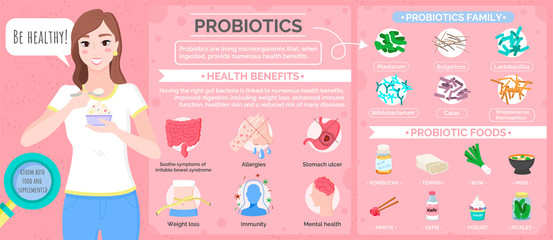
Benefits of probiotics
Probiotics may help:
- Improve digestion
- Restore gut balance
- Support immune function
- Reduce diarrhea
- Support vaginal health
Natural Sources of Probiotics
Probiotics are not only available as supplements but also occur naturally in certain fermented foods.
Including these foods in your diet may help support gut health.
Common probiotic-rich foods
Yogurt
One of the most well-known probiotic foods.
👉 Contains:
- Lactobacillus
- Bifidobacterium
Kefir
A fermented milk drink with a wide variety of beneficial bacteria and yeast.
👉 Often more potent than yogurt
Sauerkraut
Fermented cabbage rich in beneficial bacteria.
👉 Also provides fiber and vitamins
Kimchi
A traditional fermented vegetable dish.
👉 Contains multiple probiotic strains
Kombucha
A fermented tea containing bacteria and yeast.
👉 May support gut health
Fermented cheeses
Some cheeses contain live cultures that contribute to gut balance.
Are food sources enough?
For general gut health, probiotic foods may be sufficient.
However, supplements may be more effective for:
- Specific conditions
- Antibiotic-associated diarrhea
- Targeted therapeutic use
Bottom Line
Natural probiotic foods can support gut health and are a useful addition to a balanced diet, although supplements may be needed for specific conditions.
Best probiotic strains by condition
Gut Health and Digestive Problems
Common strains:
- Lactobacillus acidophilus
- Bifidobacterium lactis
- Lactobacillus plantarum
👉 May help with:
- Bloating
- Irritable bowel symptoms
- General digestive balance
For more information see:
Antibiotic-Associated Diarrhea
Antibiotics can disrupt gut bacteria.
Effective strains include:
- Saccharomyces boulardii
- Lactobacillus rhamnosus GG
👉 Benefits:
- Reduce diarrhea
- Support microbiome recovery
Related article:
Vaginal Health
Some probiotic strains help maintain vaginal flora.
Common strains:
- Lactobacillus rhamnosus
- Lactobacillus reuteri
👉 May help:
- Maintain pH balance
- Reduce risk of infections
Mre information here:
Immune Support
Certain strains support immune function.
Examples:
- Lactobacillus casei
- Bifidobacterium bifidum
👉 May help:
- Improve immune response
- Reduce frequency of infections
Probiotics for children
Probiotics are often used in children for digestive and immune support.
👉 Common uses:
- Diarrhea
- Antibiotic side effects
- Mild digestive issues
👉 Important:
- Use age-appropriate formulations
- Choose well-studied strains

Probiotics and antibiotics
Antibiotics can reduce beneficial bacteria in the gut.
👉 Probiotics may help:
- Reduce antibiotic-associated diarrhea
- Restore gut microbiome
How to take them:
- Take probiotics 2–3 hours after antibiotics
- Continue use for several days after finishing antibiotics
Side effects of probiotics
Probiotics are generally safe, but may cause:
- Bloating
- Gas
- Mild digestive discomfort
👉 These are usually temporary.
Interactions and precautions
- Probiotics are generally safe with most medications
- Timing matters when taken with antibiotics
- People with weakened immune systems should use caution
How to choose a probiotic
- Select strain-specific products
- Look for clinically studied strains
- Use appropriate doses
Bottom Line
Probiotics can support gut health, immune function, and recovery after antibiotics. Choosing the right strain and using it correctly is key to achieving the best results.
What are the best probiotic strains for gut health?
Lactobacillus acidophilus, Bifidobacterium lactis, and Lactobacillus plantarum are commonly used for digestive support.
Can probiotics help with antibiotic side effects?
Yes, strains such as Saccharomyces boulardii and Lactobacillus rhamnosus GG may reduce antibiotic-associated diarrhea.
Are probiotics safe for children?
Yes, probiotics are generally safe for children when using age-appropriate products and well-studied strains.
What probiotics are best for vaginal health?
Lactobacillus rhamnosus and Lactobacillus reuteri are commonly used to support vaginal flora.
When should I take probiotics with antibiotics?
Take probiotics 2–3 hours after antibiotics to avoid reduced effectiveness.
Do probiotics have side effects?
Some people may experience bloating or gas, especially at the beginning.
How long does it take for probiotics to work?
Effects may be noticed within a few days to a few weeks, depending on the condition.
Can probiotics boost the immune system?
Certain strains may support immune function and reduce the frequency of infections.
Should I take probiotics every day?
Daily use may help maintain gut balance, but it depends on individual needs.
Are all probiotic supplements the same?
No, different strains have different effects, so choosing the right one is important.
This article is based on current scientific evidence and general nutritional guidelines.